





Comfortable medical scrubs are not just about soft fabric. For healthcare workers, comfort also depends on fit, stretch, breathability, pocket placement, waistband design, pant length, fabric weight, and how the scrubs feel after several hours of standing, walking, bending, and patient care.
Nurses, CNAs, medical assistants, dental staff, veterinary teams, physicians, and healthcare students often wear scrubs for long shifts in fast-moving settings. Choosing comfortable medical scrubs means looking beyond color and style to understand how the garment supports movement, temperature control, storage, and daily durability.
Quick Answer
Medical scrubs are comfortable for long shifts when they fit properly, move with the body, feel breathable, provide enough pocket storage, stay secure at the waist, and hold up through frequent washing. The most comfortable scrubs usually combine stretch fabric, lightweight construction, correct pant length, soft seams, functional pockets, and workplace-appropriate coverage.
Healthcare workers should look for:
- Flexible fabric with enough stretch
- Breathable materials for active shifts
- Waistbands that stay secure without digging
- Tops that allow shoulder and arm movement
- Pants that do not drag, bunch, or slide
- Pockets placed where they are useful
- Soft seams and comfortable necklines
- Easy-care fabric for frequent washing
- Professional coverage during bending, reaching, and sitting
- Fit options for petite, tall, short, regular, men’s, and women’s sizing
Why Comfort Matters During Healthcare Shifts
Healthcare work often includes long periods of standing, walking, lifting, reaching, bending, charting, and moving between rooms. A scrub set that feels fine for a few minutes may become uncomfortable after a full shift if it pulls at the shoulders, traps heat, rubs at the neck, or needs constant adjustment.
NIOSH has discussed how prolonged standing at work can contribute to fatigue, leg discomfort, swelling, low back discomfort, and general physical strain. Scrubs do not solve these workplace issues alone, but comfortable workwear can help reduce avoidable irritation during already demanding shifts. For broader workplace context, see NIOSH’s guidance on prolonged standing at work.
Comfortable scrubs should support:
- Natural movement
- Temperature control
- Professional appearance
- Proper coverage
- Practical storage
- Easy laundering
- Long-wear durability
Fit Is the Foundation of Scrub Comfort
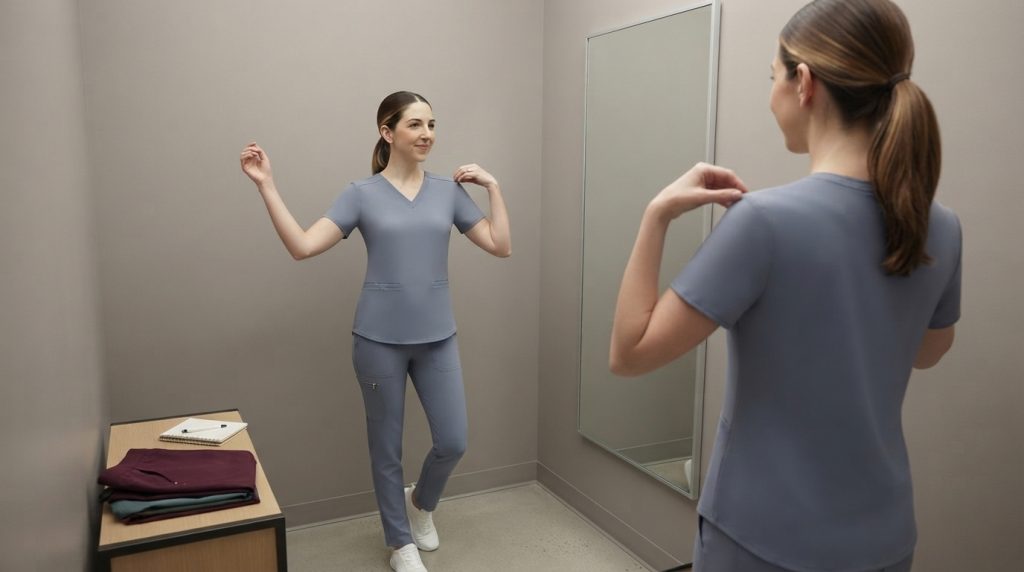
Fit is the first part of comfort. Even high-quality fabric can feel uncomfortable if the scrub top is too tight, the pants are too long, or the waistband slips during movement.
What a comfortable scrub fit should allow
A good scrub fit should let the wearer:
- Raise arms without shoulder pulling
- Bend forward without losing coverage
- Sit without waistband pressure
- Walk quickly without fabric catching
- Reach overhead without the top riding up too much
- Carry items in pockets without sagging
- Move between tasks without constant adjusting
Scrubs that are too tight may restrict movement and create pressure points. Scrubs that are too loose may look unprofessional, shift during work, or interfere with active tasks.
Tops Should Move With the Shoulders
Healthcare workers use their upper body throughout the day. They may reach for supplies, assist patients, lift equipment, chart at a workstation, or move quickly between rooms. A scrub top that restricts the shoulders can become uncomfortable quickly.
Comfortable scrub top features
Look for:
- Shoulder room without excess bagginess
- Side vents for easier movement
- Stretch fabric
- Necklines that do not rub
- Sleeves that allow reaching
- Chest and back fit that does not pull
- Length that provides coverage when bending
A top should feel secure but not stiff. If a worker has to pull the shirt down constantly or adjust the shoulders throughout the shift, the fit is not ideal.
Scrub Pants Need the Right Waistband and Length
Scrub pants can make or break comfort during long shifts. Pants that slide, dig in, drag, or bunch can distract workers throughout the day.
Waistband options
Common scrub waistband styles include:
- Full elastic waistband
- Drawstring waistband
- Knit waistband
- Yoga-style waistband
- Half-elastic waistband
- Zip-fly waistband
- Combination elastic and drawstring waistband
There is no single best waistband for everyone. A yoga-style waistband may feel soft and flexible for one worker, while another may prefer a drawstring for adjustability. The best waistband stays secure without digging into the abdomen during sitting, bending, or walking.
Pant length options
Comfort also depends on inseam. Medical scrub pants often come in:
- Petite length
- Regular length
- Tall length
- Short length
Pants that are too long can drag on the floor and feel sloppy. Pants that are too short may look awkward or feel restrictive. Jogger pants can help reduce dragging because of ankle cuffs, but workplace dress codes should be checked before choosing joggers.
Breathability Helps During Active Work
Breathability is especially important in busy clinical environments. Healthcare workers may move between patient rooms, treatment areas, break rooms, supply rooms, and front-office spaces with different temperatures.
Choosing breathable scrubs can help workers feel more comfortable when shifts are active, warm, or physically demanding.
Breathable scrub features to consider
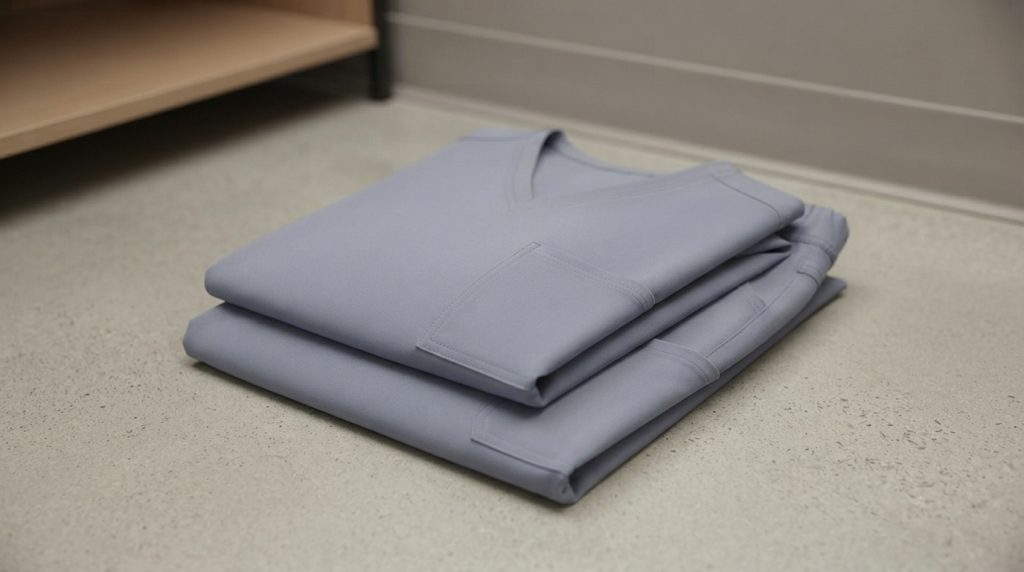
- Lightweight fabric
- Moisture-conscious blends
- Stretch panels
- Side vents
- Looser but controlled fit
- Fabric that does not feel heavy after hours of wear
- Jackets that can be layered or removed easily
Breathability should be balanced with durability. Very thin fabric may feel cool but may not provide the structure or coverage required in professional healthcare settings.
Stretch Improves Movement and Recovery
Stretch is one of the most important comfort features in modern scrubs. Healthcare workers rarely stand still all day. They bend, reach, sit, squat, lift, and walk repeatedly.
Why stretch matters
Stretch fabric can help with:
- Shoulder movement
- Bending and reaching
- Seated comfort
- Walking and stair movement
- Reduced fabric pulling
- Better recovery after movement
- Less restriction during patient care
Stretch usually comes from fabric blends that include spandex or similar flexible fibers. Some scrubs stretch in two directions, while others provide four-way stretch. Four-way stretch can be especially helpful for workers with active roles.
Fabric Weight Affects All-Day Comfort
Scrub fabric can feel lightweight, midweight, or structured. Each has benefits depending on the work environment.
Lightweight scrubs
Lightweight scrubs may feel cooler and easier to move in. They can be helpful for active workers, warm climates, or busy clinics.
Best for:
- Long shifts
- Active roles
- Warm work environments
- Workers who dislike heavy fabric
Midweight scrubs
Midweight scrubs often balance comfort and structure. They may provide better coverage and durability while still feeling flexible.
Best for:
- Daily clinical wear
- Mixed indoor environments
- Workers who want comfort and polish
Structured scrubs
Structured scrubs may look more polished but can feel less relaxed if the fabric has limited stretch.
Best for:
- Professional settings
- Provider roles
- Workers who prefer a crisp appearance
The most comfortable option depends on body type, role, shift length, and workplace temperature.
Pockets Should Support the Workday
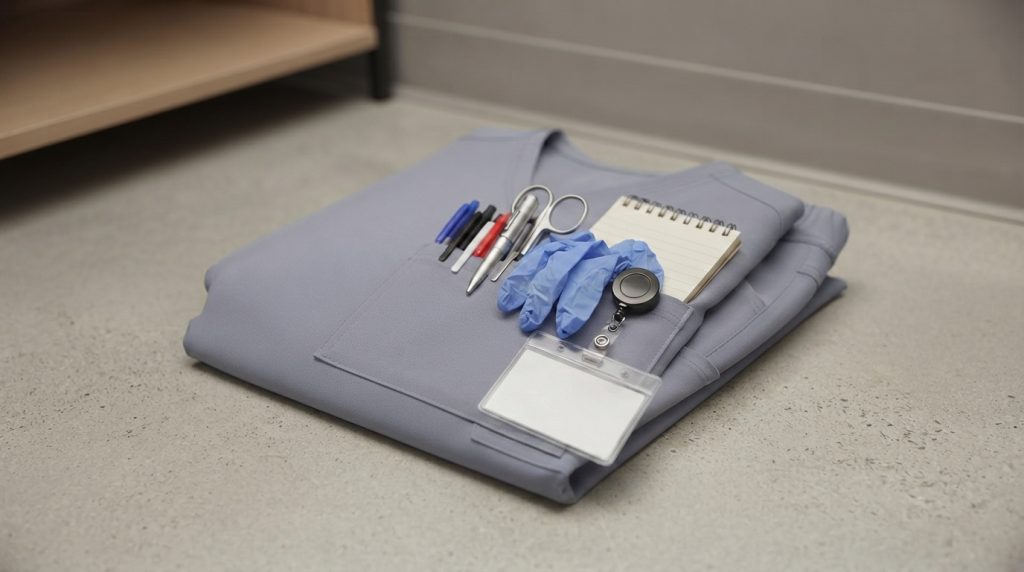
Pockets are part of comfort because they affect how workers carry daily essentials. If pockets are too few, too shallow, or poorly placed, the wearer may need to carry items awkwardly or overload one area of the garment.
Common items healthcare workers carry
- Pens
- Badge reels
- Phone
- Small notebook
- Gloves
- Alcohol pads
- Tape
- Scissors
- Penlight
- Keys
- Small clinical tools
- Stethoscope accessories
Useful pocket features
Comfortable scrub pockets should be:
- Easy to reach
- Deep enough for essentials
- Secure enough to prevent items from falling
- Balanced between top and pants
- Placed without adding awkward bulk
- Reinforced enough for frequent use
Cargo pockets are useful for nurses and medical assistants. Chest pockets may work well for simple storage. Zippered pockets can help secure valuables. A provider who wears a lab coat may prefer cleaner scrub tops with fewer bulky pockets.
Seams, Necklines, and Small Details Matter
Small garment details can become major comfort issues during long shifts. A scratchy seam or stiff neckline may not seem important during a quick try-on, but it can become irritating after hours of movement.
Details to check before buying
- Neckline softness
- Sleeve opening comfort
- Seam placement
- Tag placement
- Side vents
- Hemline shape
- Pocket edges
- Waistband seams
- Cuff comfort on joggers
- Fabric feel against the skin
Healthcare workers with sensitive skin or long shift schedules should pay extra attention to these details.
Easy-Care Fabric Supports Long-Term Comfort
Comfort is not only about the first wear. Scrubs should remain comfortable after repeated washing. A set that shrinks, fades, wrinkles heavily, or loses shape quickly may become uncomfortable and unprofessional.
The CDC provides guidance on infection control principles and standard precautions in healthcare settings. Apparel care should always follow employer policy and garment instructions. For broader clinical hygiene context, see the CDC’s resource on standard precautions for infection control.
Laundry-related features to check
- Machine-wash instructions
- Drying instructions
- Shrink resistance
- Color retention
- Wrinkle resistance
- Fabric recovery
- Embroidery care, if applicable
- Whether the fabric attracts lint or hair
- Whether ironing is required
Easy-care scrubs are especially useful for workers who need several sets in rotation.
Comfort Needs Vary by Healthcare Role
Different healthcare workers need different comfort features. The best scrub set for a nurse may not be the best option for a physician, dental assistant, or veterinary technician.
Nurses and CNAs
Nurses and CNAs often need scrubs that support walking, lifting, bending, and pocket-heavy work.
Helpful features include:
- Stretch fabric
- Cargo pockets
- Secure waistbands
- Breathable tops
- Correct pant length
- Durable stitching
- Easy-care fabric
Many workers looking for professional scrubs for nurses prioritize comfort because nursing roles often involve extended standing, movement, and patient-facing work.
Medical assistants
Medical assistants often move between front-desk support, rooming patients, vitals, charting, and clinical assistance.
Helpful features include:
- Professional fit
- Comfortable pockets
- Easy-care fabric
- Flexible tops
- Matching jackets
- Polished colors
Physicians and advanced practice providers
Physicians, physician assistants, and nurse practitioners may prefer scrubs with a cleaner silhouette, especially when paired with lab coats.
Helpful features include:
- Professional fabric
- Minimal bulk
- Comfortable shoulder movement
- Lab coat compatibility
- Wrinkle resistance
Dental teams
Dental workers often sit, lean, reach, and work in close spaces.
Helpful features include:
- Flexible shoulders
- Comfortable seated waistbands
- Smooth fabric
- Lightweight jackets
- Easy laundering
Veterinary teams
Veterinary workers may bend, lift, clean, and work around animal hair or lint.
Helpful features include:
- Durable fabric
- Secure pockets
- Easy-care materials
- Stretch recovery
- Fabric that handles frequent washing
Local Try-On Can Help With Comfort Decisions
Comfort is personal. Two workers may choose different scrub styles even if they wear the same size. Trying on scrubs locally can help shoppers compare fabric feel, pant length, pocket placement, and waistband comfort before buying multiple sets.
For healthcare workers who prefer in-person fit checks, a local medical scrub store profile can help confirm store details before visiting.
Local try-on support can be helpful for:
- New healthcare workers
- Students buying clinical uniforms
- Workers switching brands
- Staff between sizes
- Petite or tall shoppers
- Workers comparing joggers and straight-leg pants
- Teams selecting group uniforms
How Many Comfortable Scrub Sets Are Needed?
The right number of scrub sets depends on work schedule, laundry habits, employer rules, and budget. A full-time healthcare worker may need more sets than a student or part-time employee.
Practical scrub rotation factors
Consider:
- Number of shifts per week
- Laundry frequency
- Whether uniforms must be changed after certain tasks
- Whether the workplace requires specific colors
- Whether extra jackets or underscrubs are needed
- Whether the worker wants backup sets
- Whether scrubs are embroidered
Many workers keep enough scrubs for scheduled shifts plus at least one backup set. Teams and clinics may also need extra planning for new hires and replacement pieces.
Comfort vs Style: How to Balance Both
Modern scrubs can be both professional and stylish, but comfort should not be sacrificed for appearance. A scrub set may look polished on a hanger but become frustrating during a real shift if it lacks stretch, storage, or coverage.
A balanced scrub choice should offer:
- Professional appearance
- Comfortable movement
- Practical pockets
- Correct length
- Breathable fabric
- Easy care
- Workplace-approved color
- Durable construction
Style matters because healthcare workers interact with patients, coworkers, and visitors. However, comfort and function should lead the decision.
Common Mistakes When Choosing Scrubs for Long Shifts
Choosing the wrong size for the brand
Scrub brands fit differently. Do not assume one size works across every brand or collection.
Ignoring pant length
Incorrect length can affect comfort and appearance. Petite, tall, short, and regular options should be considered carefully.
Buying stiff fabric for active work
Structured fabric may look professional, but limited stretch can feel restrictive during long shifts.
Overlooking the waistband
A waistband that digs, rolls, or slips can become uncomfortable quickly.
Choosing too few pockets
Workers who carry tools and small items need pocket layouts that match their role.
Forgetting about laundering
Scrubs should remain comfortable after repeated washing, not only during the first wear.
Final Checklist for Long-Shift Scrub Comfort
Before buying scrubs for long shifts, healthcare workers should check:
- Workplace color requirement
- Proper top size
- Proper pant size
- Correct pant length
- Shoulder mobility
- Waistband comfort
- Fabric stretch
- Breathability
- Pocket placement
- Fabric weight
- Seam softness
- Neckline comfort
- Laundering instructions
- Return or exchange policy
- Jacket or underscrub compatibility
Comfortable scrubs should help healthcare workers focus on care, not constant adjustments. The best long-shift scrubs fit the body, match the role, support movement, and stay practical through repeated wear and washing.

FAQs
What type of scrubs are best for long shifts?
The best scrubs for long shifts usually have stretch fabric, breathable construction, comfortable waistbands, useful pockets, and proper pant length. They should move with the body and stay comfortable after hours of standing, walking, bending, and sitting.
Are jogger scrubs comfortable for healthcare workers?
Jogger scrubs can be comfortable because the cuffed ankle helps prevent dragging and the fit often feels modern. However, healthcare workers should check workplace dress codes because not every employer allows jogger-style scrub pants.
What fabric is most comfortable for medical scrubs?
Comfortable scrub fabrics often include soft, flexible blends with stretch and breathability. Polyester, rayon, spandex, and performance blends are common. The best fabric depends on the worker’s role, temperature, movement level, and laundering needs.
Should scrubs be loose or fitted?
Scrubs should be neither too loose nor too tight. A comfortable fit should allow bending, reaching, sitting, and walking without pulling, sagging, or restricting movement. Proper coverage and professional appearance are also important.
Why do some scrubs become uncomfortable after washing?
Scrubs may become uncomfortable after washing if the fabric shrinks, loses stretch, wrinkles heavily, fades, or changes texture. Checking care instructions and choosing durable, easy-care fabric can help scrubs stay comfortable longer.