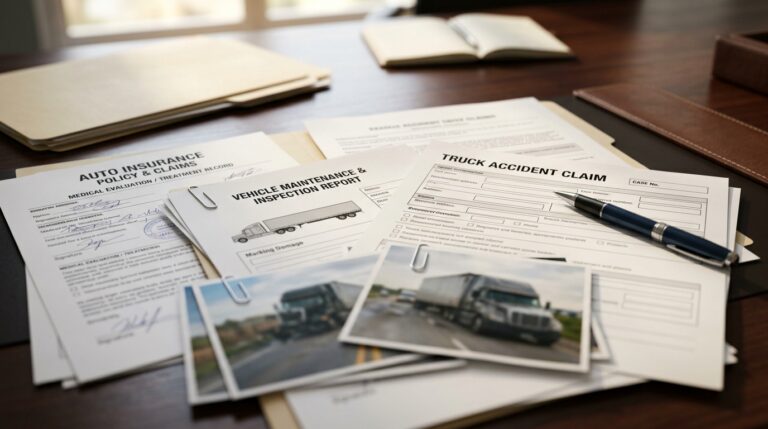



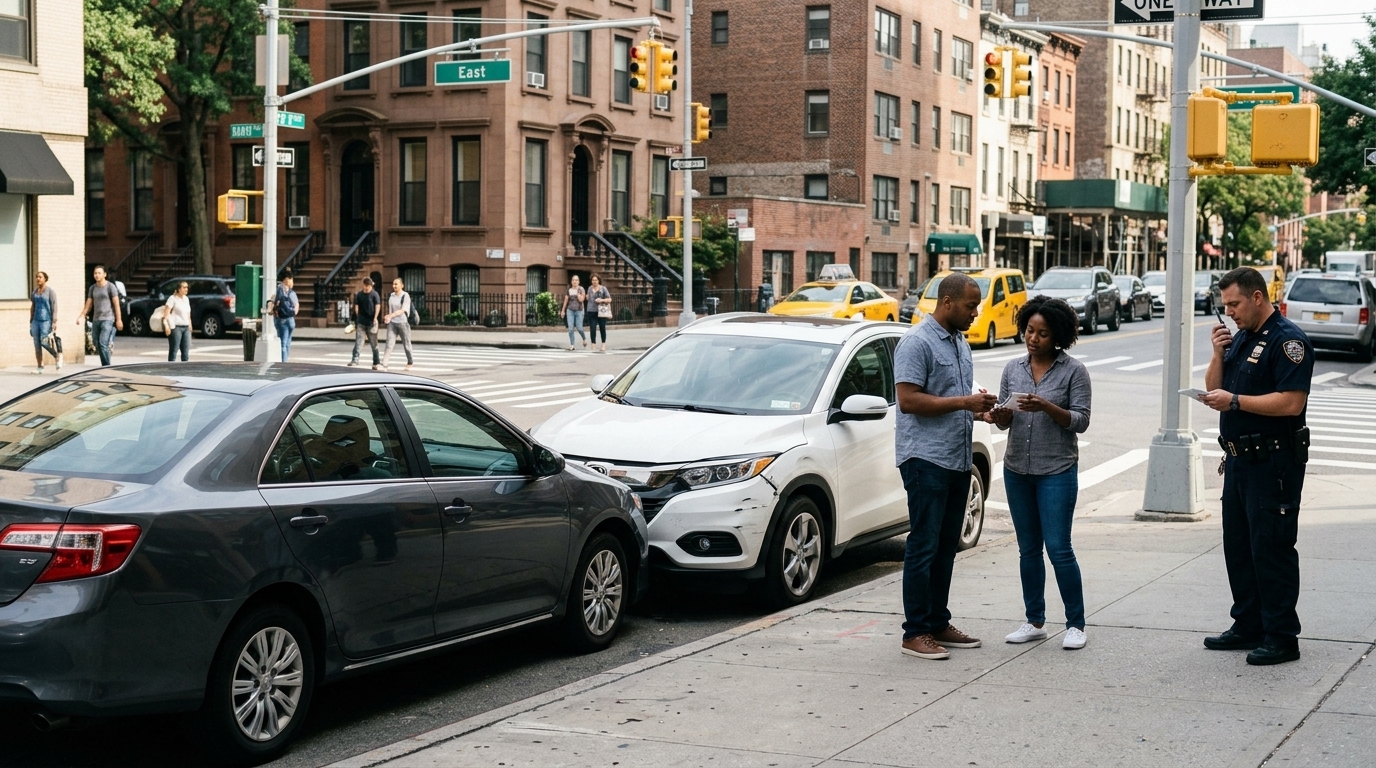
Fault disputes are common after New York car accidents, especially when drivers give different versions of what happened. One driver may claim the other was speeding, distracted, following too closely, or failed to yield. When the facts are unclear, evidence becomes extremely important. People involved in disputed crashes may review guidance from a New York car accident attorney resource to understand how liability, insurance, and injury claims are generally evaluated.
Quick Answer
To dispute fault after a car accident in New York, an injured person should gather police reports, photos, videos, witness statements, vehicle damage records, medical records, insurance correspondence, and any available surveillance or dashcam footage. Fault is not always decided by one driver’s statement. Insurers, attorneys, and courts may review traffic laws, physical evidence, crash location, road conditions, vehicle damage patterns, and whether either driver violated a duty of care.
Key Takeaways
- Fault can be disputed even when the police report appears to favor one side.
- Photos, videos, witness statements, and crash reports can help challenge an incorrect version of events.
- New York follows comparative negligence rules, meaning fault can be divided between parties.
- A person who is partly at fault may still have a claim, but the recovery may be reduced.
- No-fault insurance can provide certain benefits regardless of fault, but fault may still matter for serious injury claims.
- Early evidence preservation is critical because video footage, scene conditions, and witness availability can change quickly.
Why Fault Disputes Happen After Car Accidents
Car accidents often happen quickly. Drivers may only see part of the event, especially in intersection crashes, lane-change accidents, rear-end collisions, sideswipe crashes, parking lot accidents, and multi-vehicle crashes. After the crash, each person may remember the event differently.
Fault disputes may happen because of:
- Conflicting driver statements
- No clear eyewitnesses
- Limited police investigation at the scene
- Missing dashcam or surveillance footage
- Poor weather or visibility
- Disagreement about traffic light color
- Disagreement about speed
- Disputed lane position
- Multi-vehicle chain reaction crashes
- Insurance company attempts to reduce payout exposure
A fault dispute does not automatically mean the claim fails. It means the available evidence must be reviewed carefully.
What Does Fault Mean in a New York Car Accident?
Fault means legal responsibility for causing or contributing to the crash. In a car accident case, fault may be based on careless driving, violation of traffic laws, unsafe vehicle operation, or failure to act reasonably under the circumstances.
Common examples of driver negligence may include speeding, distracted driving, unsafe lane changes, following too closely, failing to yield, running a red light, driving while impaired, making an improper turn, or failing to adjust to weather and road conditions.
Fault can also involve more than one person. For example, one driver may have been speeding while another driver made an unsafe turn. In that situation, fault may be divided between both drivers.
New York Comparative Negligence Explained
New York uses a comparative negligence rule. Under New York Civil Practice Law & Rules § 1411, culpable conduct by an injured person does not automatically bar recovery, but it can reduce damages based on the person’s share of responsibility.
This matters because insurance companies may argue that the injured person was partly at fault. If that argument succeeds, the value of the claim may be reduced. For example, if a person is found 20% responsible for a crash, the final recovery may be reduced by that percentage.
This rule makes evidence especially important. Even a small shift in fault percentage can affect settlement discussions and claim value.
Step 1: Review the Police Report Carefully
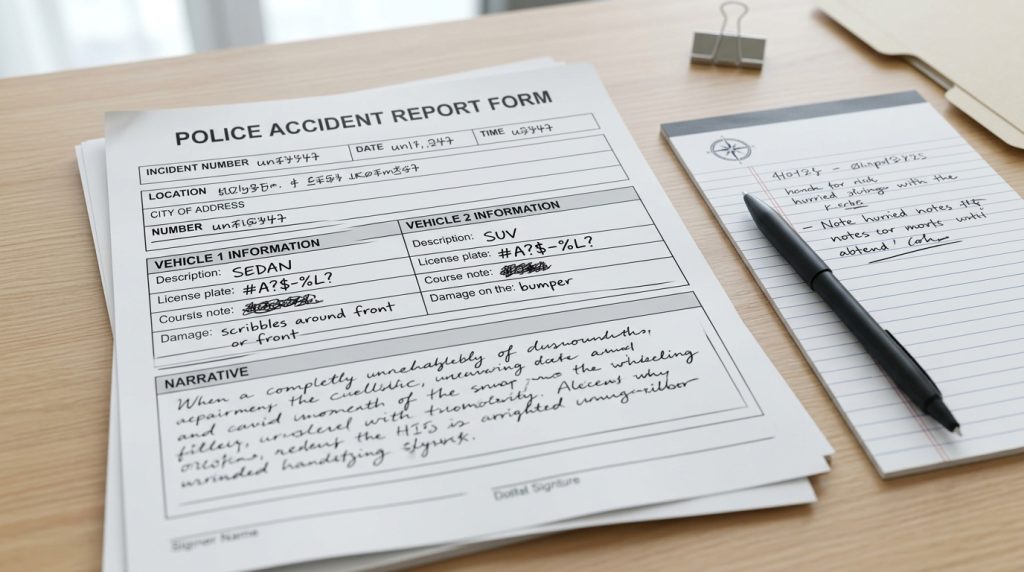
A police report can be an important starting point, but it is not always the final word on fault. Officers usually arrive after the crash. They may rely on driver statements, visible vehicle damage, witness comments, road conditions, and their observations at the scene.
A report may contain useful details such as:
- Date, time, and location of the crash
- Driver and vehicle information
- Insurance details
- Witness names
- Weather and road conditions
- Diagram of the crash
- Apparent contributing factors
- Statements from drivers or witnesses
- Tickets or citations issued
However, reports can also contain errors. A driver’s statement may be incomplete. A vehicle position may be misunderstood. A witness may not be listed. The diagram may not fully show how the crash occurred.
The New York DMV crash report access page provides information about ordering crash reports. Reviewing the report early can help identify mistakes, missing information, or areas that need clarification.
Step 2: Preserve Photos and Videos
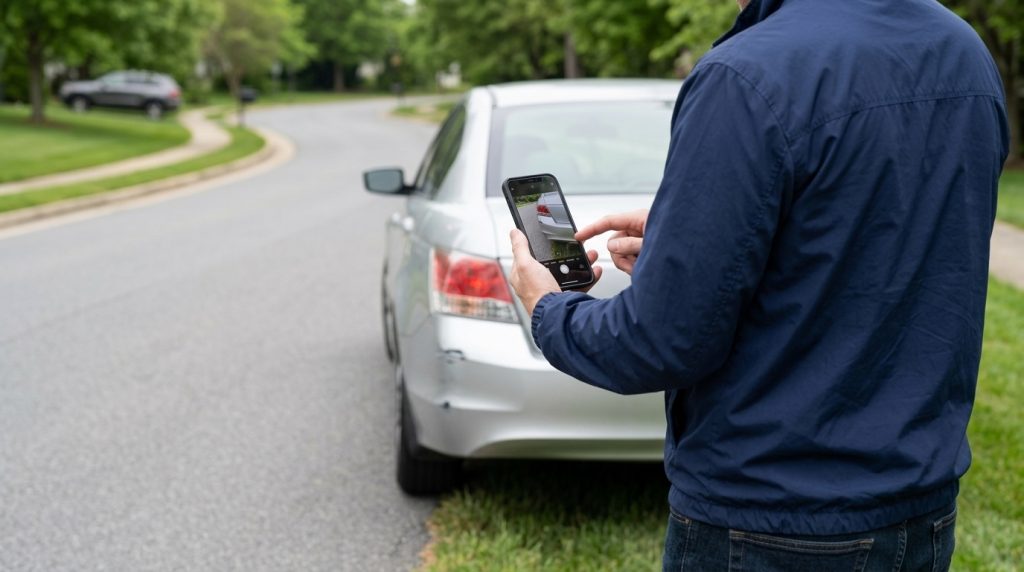
Photos and videos can help challenge an incorrect fault decision. Images taken at the scene may show vehicle positions, impact points, skid marks, lane markings, traffic lights, stop signs, road debris, weather conditions, visibility problems, or hazards that contributed to the crash.
Useful photos may include:
- Front, rear, and side vehicle damage
- License plates
- Intersection layout
- Traffic signals and signs
- Skid marks or tire marks
- Road debris and broken glass
- Vehicle resting positions
- Road defects or construction zones
- Weather and lighting conditions
- Nearby security cameras
Video can be even stronger. Dashcam footage, doorbell camera footage, business security footage, traffic camera footage, or nearby surveillance may show what happened before impact. Because many systems overwrite footage quickly, preservation should happen as soon as possible.
Step 3: Look for Witnesses
Witnesses can help resolve conflicting stories. A neutral witness may have seen the traffic light, lane change, speeding behavior, sudden stop, illegal turn, or distracted driving. Witnesses may also confirm whether one driver admitted fault at the scene.
Useful witness information includes names, phone numbers, email addresses, short written statements, and where the witness was located when the crash happened. The witness perspective matters because a person standing on a sidewalk may have seen something different from a driver approaching from another direction.
Witnesses can become harder to find later, so contact information should be collected early whenever possible.
Step 4: Compare Vehicle Damage With the Accident Story
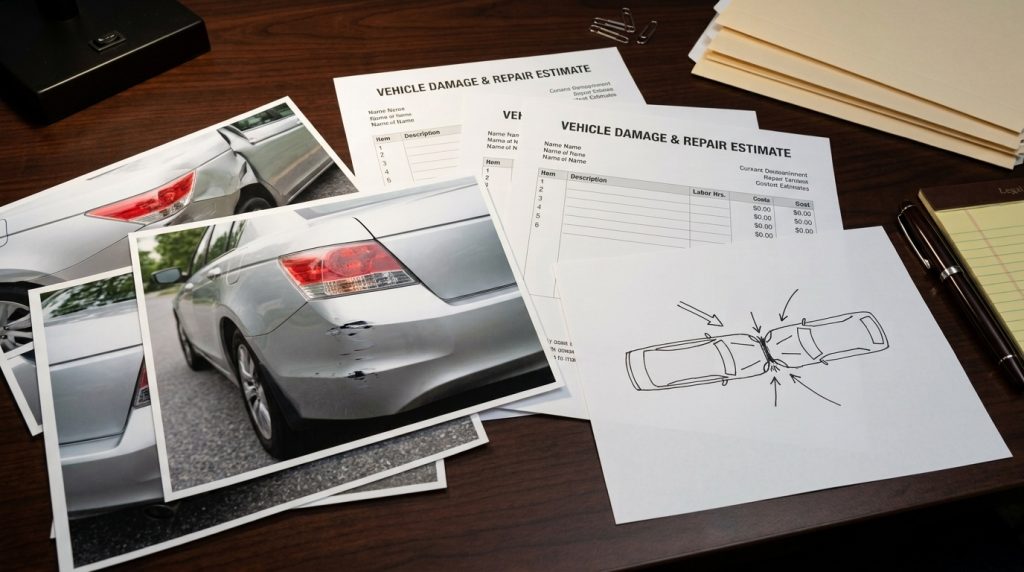
Vehicle damage can help show how the crash happened. The location, angle, and severity of impact may support or contradict a driver’s version of events.
For example:
- Rear-end damage may suggest following too closely, but not always.
- Side damage may support a lane-change or intersection dispute.
- Front-corner damage may support a turning movement.
- Damage height may matter in truck or SUV collisions.
- Multiple impact points may suggest a chain-reaction event.
- Minimal damage does not always mean no injury occurred.
Damage analysis is not always simple. In serious or highly disputed cases, an accident reconstruction expert may evaluate vehicle damage, roadway evidence, speed estimates, impact angles, and crash dynamics.
Step 5: Use Medical Records to Support the Timeline
Medical records do not usually prove who caused the crash, but they can support the injury timeline. They may show when symptoms began, what body parts were injured, what treatment was needed, and whether the injuries are consistent with the type of collision.
This matters because insurance companies may dispute not only fault but also injury causation. They may argue that the injury was pre-existing, unrelated, minor, or caused by something else.
Strong documentation may include emergency room records, urgent care notes, primary care records, specialist evaluations, imaging reports, physical therapy notes, surgical records, and work restriction letters.
Step 6: Be Careful With Insurance Statements
Insurance adjusters often ask drivers to describe the crash. These conversations can affect fault decisions. A statement that seems harmless may later be used to argue that the injured person admitted partial responsibility.
It is usually best to avoid guessing. If a driver does not know another vehicle’s speed, does not know whether the light changed, or does not know exactly when the other driver entered the lane, guessing can create problems.
Accident victims should also avoid broad statements such as “I’m fine” or “I didn’t see them” without context. These statements may be interpreted in ways the speaker did not intend.
Step 7: Understand the Role of Traffic Tickets
A traffic ticket can be useful evidence, but it does not automatically decide the entire civil claim. If one driver receives a ticket for speeding, unsafe lane change, failure to yield, or running a red light, that may support a fault argument. However, the insurance company may still review the full facts.
Likewise, the absence of a ticket does not mean no one was negligent. Police may decide not to issue a citation for many reasons, especially if they did not witness the crash or if the facts are unclear.
Traffic tickets, plea outcomes, crash reports, and driver statements should be considered alongside the full evidence record.
Step 8: Know How No-Fault Insurance Fits In
New York no-fault insurance can create confusion in fault disputes. No-fault benefits may be available for certain medical expenses and lost earnings regardless of who caused the accident. However, fault can still matter for pain and suffering claims, property damage, serious injury claims, and claims against an at-fault driver.
The New York Department of Financial Services no-fault guidance explains basic no-fault insurance concepts for New York accident claims. In serious injury cases, the injured person may need to deal with both no-fault benefits and a separate liability claim.
This is why no-fault should not be confused with “fault does not matter.” Fault may still become central if injuries are serious or losses go beyond basic no-fault benefits.
Step 9: Consider the Serious Injury Threshold
In many New York car accident cases, pain and suffering claims depend on whether the injured person meets the serious injury threshold. New York Insurance Law § 5102 defines serious injury categories, and New York Insurance Law § 5104 addresses when non-economic loss claims may proceed.
This matters in fault disputes because a strong liability argument may not be enough by itself. The injured person may also need medical evidence showing that the injury qualifies under New York law.
When fault and injury severity are both disputed, the claim may require careful review of accident evidence and medical proof.
What Evidence Can Help Dispute Fault?
A disputed crash should be supported by as much evidence as possible. The goal is to show what happened, why the other party may be responsible, and why an insurer’s fault decision may be incomplete or wrong.
Helpful evidence may include:
- Police crash report
- DMV accident report
- Scene photos
- Dashcam footage
- Security camera footage
- Traffic camera footage
- Witness statements
- Vehicle damage photos
- Repair estimates
- Medical records
- Emergency response records
- 911 call records
- Cell phone records, if distraction is alleged
- Traffic signal timing records
- Road design or construction records
- Expert accident reconstruction opinions
People researching this issue may also find a detailed guide on disputing fault after a car accident helpful when organizing the facts and evidence.
What If the Insurance Company Blames the Injured Person?
Insurance companies may assign partial or full fault to reduce claim exposure. If this happens, the injured person can respond with evidence. A disagreement with the insurer should be based on facts, not emotion.
The response may include corrected statements, photos, witness information, medical documentation, police report clarification, repair records, or video evidence. In some cases, the insurer may change its position after reviewing additional proof.
If the insurer refuses to reconsider, the dispute may become part of settlement negotiation or litigation.
What If Both Drivers Are Partly at Fault?
Many crashes are not simple. Both drivers may have made mistakes. One driver may have followed too closely while another made a sudden unsafe lane change. One driver may have been speeding while another failed to yield.
Under New York comparative negligence, partial fault can reduce damages but does not necessarily eliminate the claim. This is why the exact percentage of fault matters.
Even when an injured person may share some responsibility, it can still be important to challenge an unfair or exaggerated fault assignment.
Local Factors That May Matter in Long Island Car Accidents
Long Island crash claims may involve local road conditions, heavy traffic, intersection design, limited shoulders, commercial corridors, parking lot layouts, weather issues, and nearby surveillance sources. Location-specific evidence can sometimes help explain why a crash happened.
For example, a dangerous intersection may have recurring visibility problems. A shopping center may have parking lot cameras. A nearby business may have video footage. Road construction signs or lane closures may affect liability.
People researching local legal resources may review a Farmingdale legal office location when looking for Long Island accident claim information.
When Legal Guidance May Be Useful
Legal guidance may be especially useful when the insurer blames the injured person, the police report contains errors, the crash involved multiple vehicles, witness statements conflict, video footage must be preserved, or serious injuries are involved.
A disputed-fault claim may also require review of medical records, insurance forms, serious injury evidence, traffic laws, expert analysis, and settlement history. Publicly available accident case results can provide examples of serious accident claim outcomes, although every case depends on its own facts, evidence, and available coverage.
FAQs About Disputing Fault After a New York Car Accident
Can a police report be wrong about fault?
Yes. A police report can contain errors or incomplete information. Officers usually arrive after the crash and may rely on limited statements or evidence. Photos, videos, witnesses, vehicle damage, and expert analysis may help correct or challenge a report.
Can someone still recover compensation if partly at fault in New York?
Yes. New York comparative negligence rules generally allow recovery even when an injured person shares some fault. However, compensation may be reduced based on the person’s percentage of responsibility.
What is the best evidence to dispute fault?
The strongest evidence often includes video footage, scene photos, police reports, witness statements, vehicle damage analysis, traffic signal information, and medical records. In serious disputes, accident reconstruction may also help explain how the crash occurred.
Does no-fault insurance mean fault is irrelevant?
No. No-fault insurance may provide certain benefits regardless of fault, but fault can still matter for property damage, serious injury claims, pain and suffering, and lawsuits against an at-fault driver.
What should someone avoid saying after a crash?
Drivers should avoid admitting fault, guessing about what happened, downplaying injuries, or making statements that could be misunderstood. It is better to provide accurate facts and avoid conclusions until the evidence is reviewed.
Final Thoughts
Fault disputes after New York car accidents should be handled with evidence, not assumptions. Police reports, photos, videos, witnesses, vehicle damage, medical records, traffic laws, and insurance documents can all affect the outcome. Because New York allows fault to be divided, even a partial fault dispute can influence the value of a claim. The earlier evidence is preserved, the stronger the injured person’s position may be.