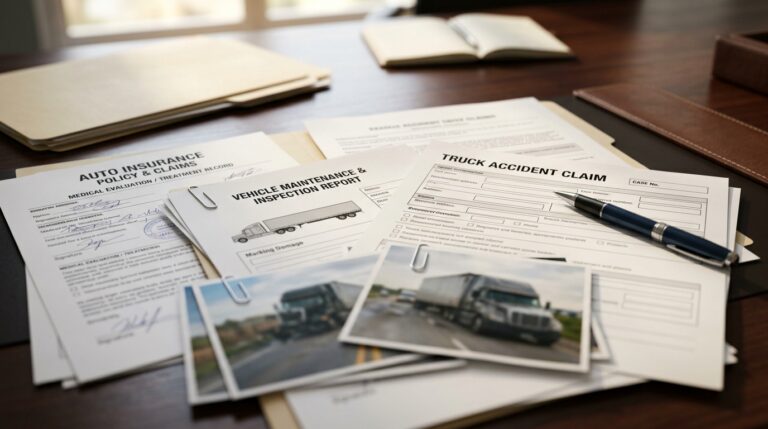



A hit-and-run accident creates two problems at once. First, you have the crash itself: injuries, vehicle damage, medical care, repairs, missed work, and insurance calls. Second, you have the missing-driver problem: the person who caused the crash left before giving their name, insurance information, or explanation.
In Houston, that missing-driver problem can become time-sensitive. Traffic cameras, business cameras, dashcams, witness memories, tow records, and nearby property footage may not stay available for long.
This guide explains what to do after a hit-and-run accident in Houston, what evidence may help, how police and crash reports may fit in, what insurance coverage may apply, and when legal guidance may be useful.
Quick Answer
After a hit-and-run accident in Houston, do not chase the fleeing driver. Move to safety, call 911, get medical care, write down every vehicle detail you remember, photograph the scene, collect witness information, look for nearby cameras, track the police or crash report, notify your insurer, review your policy for uninsured/underinsured motorist coverage, collision coverage, PIP, MedPay, and rental coverage, and save medical, repair, wage, and insurance records.
If you were injured and the missing driver cannot be identified, speaking with a car accident lawyer in Houston TX may help you understand what evidence should be preserved, what coverage may apply, and what Texas deadlines could affect your claim.
Key Takeaways
- A hit-and-run claim is partly an accident claim and partly a missing-driver investigation.
- Do not chase a fleeing driver. Safety, police reporting, medical care, and evidence preservation matter more.
- Useful evidence may include partial plate numbers, vehicle color, make, model, direction of travel, dashcam footage, nearby business cameras, witness names, repair photos, and medical records.
- Your own insurance may become important, especially UM/UIM, collision, PIP, medical payments, or rental coverage.
- Texas law requires drivers involved in certain collisions to stop, provide information, and render reasonable aid.
- Texas injury deadlines and shared-fault arguments can still matter even when the other driver disappears.
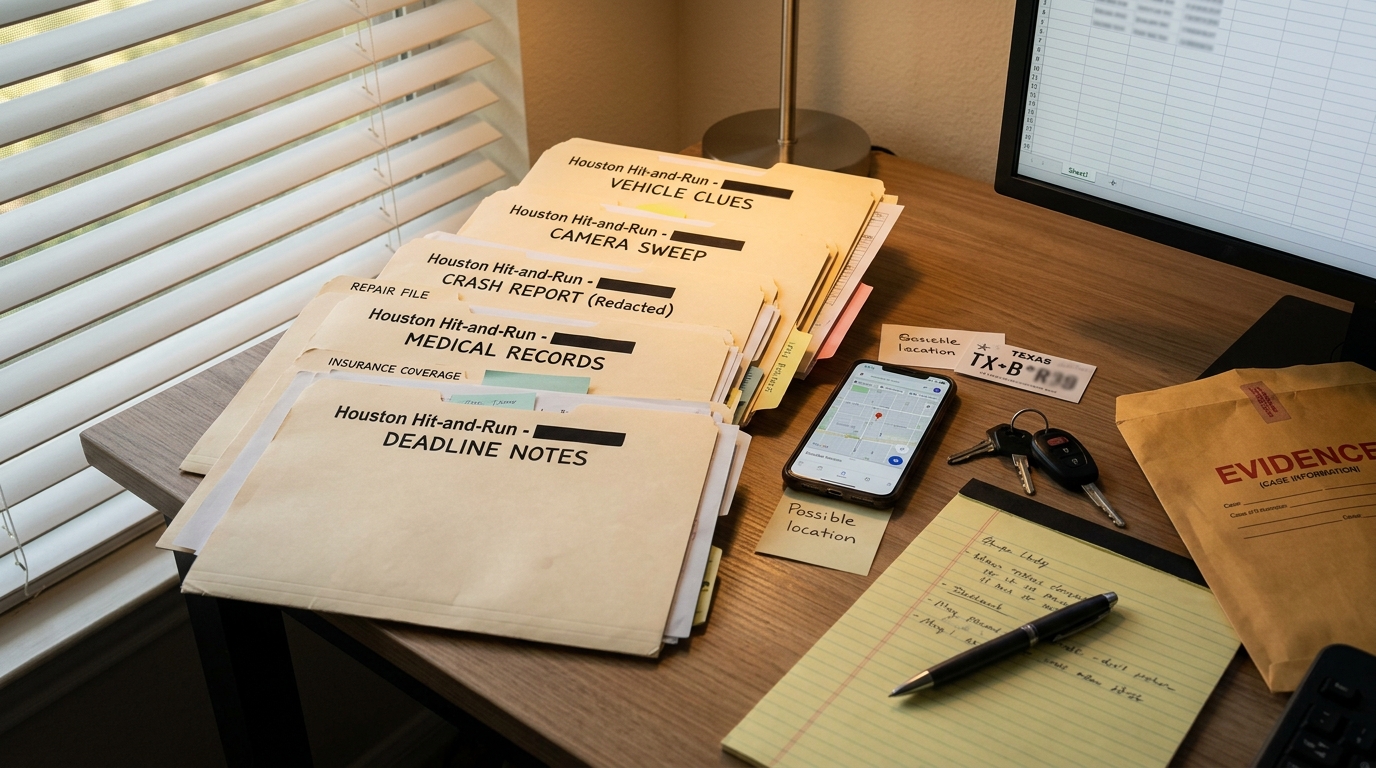
The Missing-Vehicle Recovery File
After a hit-and-run, the claim needs a different kind of organization. Instead of only asking, “Who was at fault?” you also need to ask, “How do we preserve clues before they disappear?”
A strong recovery file usually has five sections:
- Vehicle clues
- Scene and camera evidence
- Police and crash report records
- Medical and repair proof
- Insurance coverage documents
Each section serves a purpose. Vehicle clues may help identify the driver. Scene evidence may confirm what happened. Reports may create an official record. Medical and repair proof may show the damage caused. Insurance documents may show whether your own policy can help.
Step 1: Do Not Chase the Fleeing Driver
It is natural to want to follow the vehicle that hit you. Do not chase it. Pursuing another driver can put you, passengers, pedestrians, and other drivers in more danger.
Instead:
- Move to a safe location if possible.
- Turn on hazard lights.
- Check yourself and passengers for injuries.
- Call 911.
- Tell the dispatcher the other driver fled.
- Give the direction of travel if you know it.
- Provide the vehicle description if you can.
- Wait for instructions from emergency responders.
A hit-and-run scene can be stressful. The goal is to stay safe and preserve what you remember.
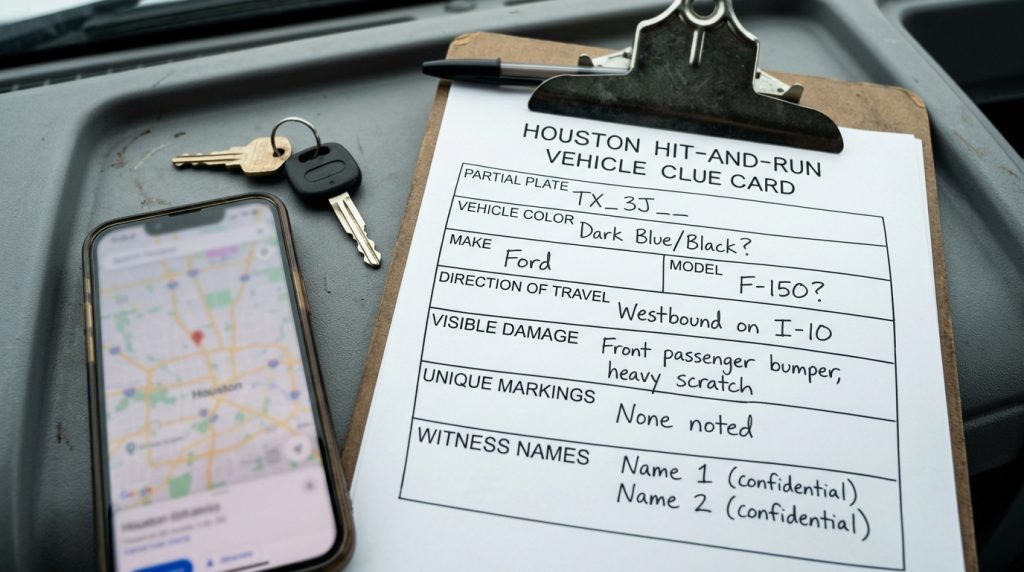
Step 2: Write Down Vehicle Clues Immediately
Memory fades quickly after a crash. Write down details before calling friends, family, insurance, or a tow company.
Record anything you remember:
- Full or partial license plate
- Plate state
- Vehicle color
- Make
- Model
- Body style
- Approximate year
- Number of doors
- Direction of travel
- Visible damage
- Missing mirror, bumper, light, or trim
- Stickers, decals, roof rack, company markings, or unique features
- Driver description, if safely observed
- Passenger details, if safely observed
- Sound of the vehicle
- Whether the vehicle turned into a business, apartment complex, gas station, or side street
Even a partial clue can matter. A partial plate plus vehicle color, body style, location, direction, and camera footage may be more useful than any single detail alone.
Step 3: Photograph the Scene Before It Changes
If you can do so safely, photograph and video the scene.
Capture:
- Vehicle damage
- License plate of your vehicle
- Road layout
- Lane markings
- Traffic signs and signals
- Skid marks or debris
- Paint transfer
- Broken glass
- Vehicle fluid
- Final resting position
- Nearby businesses
- Nearby cameras
- Construction cones or lane closures
- Weather and lighting
- Visible injuries
- Damaged personal property
Wide photos help show location and lane layout. Close photos help show impact points and physical details.
Do not stand in active lanes to take pictures. Houston freeways, frontage roads, toll roads, ramps, and major intersections can remain dangerous after the first impact.
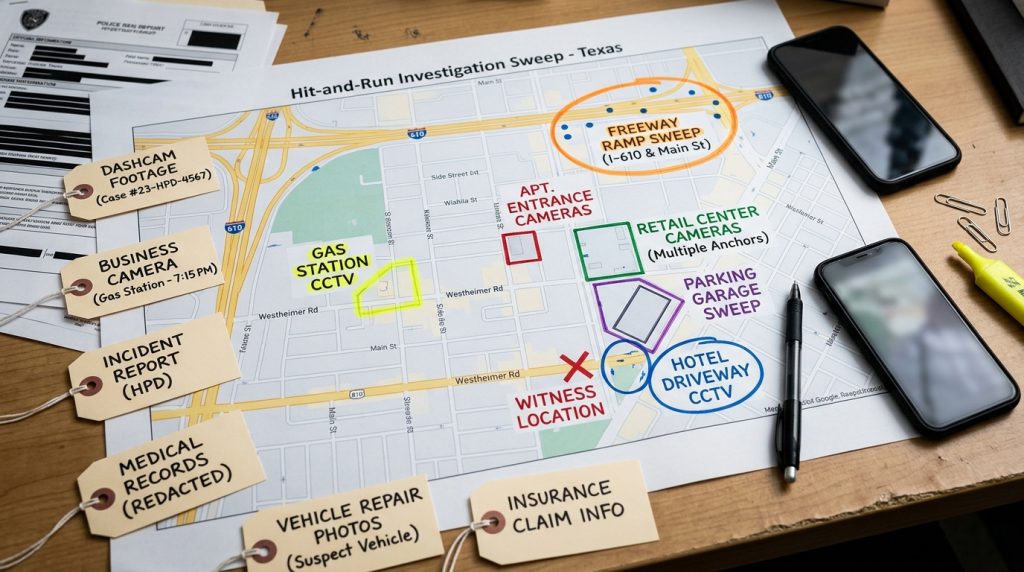
Step 4: Look for Camera Sources Quickly
Camera evidence may be one of the most important tools after a hit-and-run.
Potential sources include:
- Dashcams
- Nearby drivers
- Store cameras
- Gas station cameras
- Apartment cameras
- Parking garage cameras
- Hotel cameras
- Restaurant cameras
- Office building cameras
- Doorbell cameras
- Traffic-adjacent cameras
- Rideshare or delivery vehicle cameras
- Commercial truck cameras
Write down the names and addresses of nearby businesses or properties. Do not assume footage will be saved automatically. Many systems overwrite footage quickly.
Helpful Houston hit-and-run camera locations may include:
- Gas stations near freeway ramps
- Retail centers along Westheimer, Richmond, Kirby, Shepherd, or Highway 6
- Parking garages downtown or near the Medical Center
- Apartment entrances
- Warehouse or industrial driveways
- Hotel entrances
- Event-area lots
- Restaurant drive-through lanes
- Convenience stores near intersections
- Buildings near frontage roads
If a camera may exist, document where it is and who may control it.
Houston Crash Settings Where Hit-and-Runs May Happen
Hit-and-runs can happen anywhere, but Houston has several settings where evidence may disappear quickly.
Freeways, Ramps, and Frontage Roads
Crashes on I-45, I-10, I-69/US 59, Loop 610, Beltway 8, US 290, SH 288, Hardy Toll Road, Westpark Tollway, or Grand Parkway may involve high speeds, merging, sudden lane changes, freeway exits, frontage-road turns, and drivers leaving before police arrive.
Evidence may include:
- Dashcam footage
- Exit and ramp details
- Tow records
- Debris or paint transfer
- Vehicle damage photos
- Witness information
- Crash report details
Downtown, Midtown, Galleria, and Medical Center Areas
Dense areas may involve pedestrians, rideshare pickups, buses, scooters, parking garages, valet lanes, delivery drivers, and business cameras.
Evidence may include:
- Business camera notes
- Parking garage details
- Rideshare receipts
- Crosswalk and signal photos
- Witness names
- Time-stamped photos
- Police report information
Parking Lots, Apartments, Gas Stations, and Retail Centers
A driver may back into a vehicle, strike a pedestrian, sideswipe a parked car, or leave after a low-speed impact.
Evidence may include:
- Store or property cameras
- Vehicle-position photos
- Parking-lot layout
- Witness names
- Incident reports
- Repair estimates
- Photos before repairs
Construction Zones and Flood-Prone Roads
Poor visibility, lane shifts, standing water, work-zone congestion, and road debris can complicate hit-and-run claims.
Evidence may include:
- Construction-zone photos
- Warning sign photos
- Weather notes
- Road condition photos
- Dashcam footage
- Witness details
Step 5: Call Police and Track the Report
A hit-and-run should be reported. Texas law also requires operators involved in certain collisions to stop, give information, and render reasonable aid.
When calling police, provide:
- Your location
- Whether anyone is injured
- Vehicle description
- Partial plate, if available
- Direction of travel
- Time of crash
- Roadway or intersection
- Whether the vehicle is still visible
- Witness information
- Camera locations
- Whether your vehicle can be driven
For Houston crashes, the Houston Police Department describes an accident or crash report as a Texas Peace Officers’ Accident Report completed by a Houston police officer and filed with TxDOT. HPD also says accident reports require processing time before they are available to the public.
TxDOT is the custodian of Texas crash records and provides access to Texas Peace Officer’s Crash Reports through the Crash Report Online Purchase System for eligible requesters.
Save:
- Incident or crash report number
- Responding agency
- Officer name, if known
- Crash date
- Crash time
- Crash location
- Vehicle description
- Witness names
- Camera-location notes
- Any case or follow-up information
A police report may help document that the other driver fled, but the report is not the whole claim. Photos, videos, witnesses, medical records, repairs, and policy documents may also matter.
Step 6: Get Medical Care Even If the Driver Is Missing
Do not delay medical care because the other driver left. Your health comes first.
Seek care for:
- Headaches
- Dizziness
- Confusion
- Neck pain
- Back pain
- Shoulder pain
- Knee pain
- Numbness or tingling
- Chest pain
- Abdominal pain
- Trouble sleeping
- Anxiety after the crash
- Symptoms that appear later
- Symptoms that worsen over time
Save records from:
- Emergency medical services
- Emergency rooms
- Urgent care clinics
- Primary care doctors
- Orthopedic specialists
- Neurologists
- Imaging centers
- Physical therapy providers
- Pharmacies
Also save:
- Medical bills
- Prescription receipts
- Imaging reports
- Discharge instructions
- Referral paperwork
- Work restriction notes
- Therapy attendance records
- Follow-up appointment summaries
Medical records help show the injury timeline. Insurance companies often review whether treatment began promptly and whether follow-up care was consistent.
Step 7: Notify Your Insurance Company
When the at-fault driver disappears, your own insurance policy may become important.
When reporting the claim, explain:
- The crash was a hit-and-run
- Whether police were called
- Whether you have a report number
- Any vehicle clues you remember
- Whether there were witnesses
- Whether camera footage may exist
- Whether you were injured
- Where the vehicle was towed or repaired
Keep an insurance log with:
- Claim number
- Adjuster name
- Company name
- Phone number
- Email address
- Date of each call
- Documents requested
- What you sent
- Recorded statement requests
- Medical authorization requests
- Repair status
- Rental car details
- Settlement offers
- Denial letters
Keep communication factual. Avoid guessing about speed, distance, timing, injury severity, or what the missing driver intended.
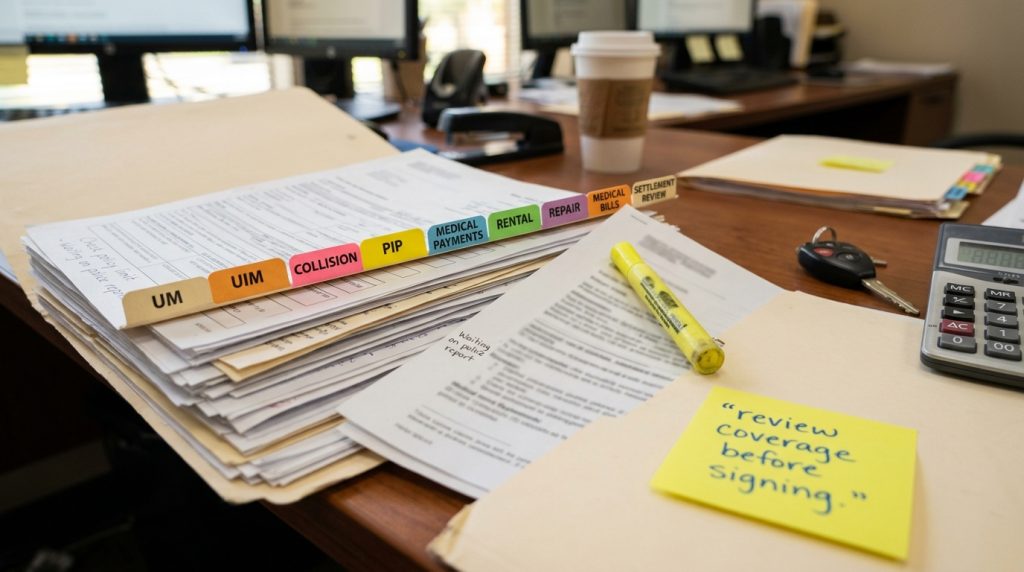
Insurance Coverage That May Matter After a Hit-and-Run
A hit-and-run claim may depend heavily on your own policy.
Uninsured/Underinsured Motorist Coverage
Uninsured/underinsured motorist coverage may help when the at-fault driver has no insurance, does not have enough insurance, or cannot be found after a hit-and-run, depending on the policy and facts.
Collision Coverage
Collision coverage may help pay for vehicle repairs even if the other driver is unidentified, subject to policy terms and deductible.
Personal Injury Protection
PIP may help pay medical bills and certain other losses, depending on the policy. Texas policies may include PIP unless rejected in writing.
Medical Payments Coverage
Medical payments coverage may help with medical expenses, depending on the policy.
Rental Coverage
Rental reimbursement may help with transportation while the vehicle is being repaired or while a total-loss issue is being handled, depending on policy terms.
Health Insurance
Health insurance may help with medical bills, but deductibles, copays, reimbursement claims, and coordination issues may need review.
Do not rely only on a phone call summary. Ask for written coverage explanations and keep copies of policy pages, letters, and claim decisions.
What If the Missing Driver Is Later Found?
If the driver is identified, the claim may shift.
Questions may include:
- Does the driver have insurance?
- Was the vehicle owned by someone else?
- Was the driver excluded from the policy?
- Was the driver working?
- Was a rideshare, delivery, or company vehicle involved?
- Did the driver flee because of impairment, no license, no insurance, warrants, or another issue?
- Did another party contribute to the crash?
- Does your UM/UIM claim continue?
- Are there criminal case records?
- Did the driver make any statements?
Identification of the driver does not automatically solve the insurance problem. The driver may still be uninsured, underinsured, excluded from coverage, or driving someone else’s car.
What If the Driver Is Never Found?
If the driver is never found, your own insurance coverage may become the main recovery path.
Potential coverage sources may include:
- UM/UIM coverage
- Collision coverage
- PIP coverage
- Medical payments coverage
- Rental coverage
- Health insurance
- Other household policy coverage, depending on facts
- Commercial or rideshare coverage in unusual cases
If there is no applicable coverage, recovery may be difficult. That is why preserving evidence and reviewing all policies early is important.
What If the Hit-and-Run Involved a Parked Car?
A parked-car hit-and-run can still create a claim.
Steps to take:
- Photograph all damage before repair.
- Photograph the location where the vehicle was parked.
- Look for paint transfer or broken parts.
- Ask nearby businesses or apartments about cameras.
- Ask witnesses for names and phone numbers.
- Check whether a note was left.
- File a report when appropriate.
- Notify your insurer.
- Save repair estimates and rental receipts.
Texas law also addresses duties after striking an unattended vehicle, including stopping and either locating the owner or leaving a written notice with required information.
What If the Hit-and-Run Involved a Pedestrian, Cyclist, or Motorcyclist?
Hit-and-runs involving pedestrians, cyclists, and motorcyclists can cause serious injuries and may require urgent evidence preservation.
Important evidence may include:
- Crosswalk photos
- Signal timing details
- Bike or motorcycle damage
- Helmet or clothing damage
- Business camera locations
- Witness names
- 911 call information
- EMS records
- Medical records
- Photos of lighting and visibility
- Vehicle description
- Debris or paint transfer
These claims may also involve disputed visibility, right-of-way, speed, impairment, road design, or shared-fault arguments.
What If the Hit-and-Run Involved a Rideshare or Delivery Vehicle?
Houston has heavy rideshare, delivery, and commercial traffic. If the fleeing vehicle appeared to be connected to work, deliveries, rideshare, or a company route, note every visible clue.
Helpful details may include:
- Company markings
- Vehicle type
- App screenshots
- Delivery bag or signage
- Rideshare receipt
- Time and route
- Pickup or drop-off location
- Witness statements
- Camera locations
- License plate or partial plate
- Vehicle color and body style
Insurance coverage can become more complicated when app-based or commercial activity is involved.
Repair, Rental, and Total-Loss Records
Vehicle damage documentation matters in a hit-and-run claim.
Save:
- Vehicle damage photos
- Paint transfer photos
- Broken part photos
- Repair estimates
- Supplemental estimates
- Body shop invoices
- Total-loss valuation paperwork
- Rental receipts
- Towing receipts
- Storage bills
- Personal property damage receipts
- Child seat replacement information, if relevant
- Communications with repair shops and insurers
If the vehicle is declared a total loss, ask how the value was calculated. Save comparable vehicle information, valuation reports, title records, loan payoff documents, and all written communications.
Lost Wages and Daily-Life Impact
A hit-and-run injury may affect work, transportation, family responsibilities, and daily life.
Save:
- Pay stubs
- Timesheets
- Employer letters
- Missed-shift confirmations
- Work restriction notes
- Tax records
- Contractor invoices
- Proof of used sick time or vacation time
- Reduced-duty notes
- Transportation receipts
- Parking receipts for medical visits
- Medical equipment receipts
- Childcare receipts related to appointments
A short recovery journal can also help. Track pain levels, sleep problems, mobility limits, headaches, anxiety while driving, missed activities, and changes in daily routines.
Common Insurance Disputes After a Hit-and-Run
Insurance disputes may arise even when you paid for coverage.
Common disputes include:
- The insurer questions whether another vehicle was involved.
- The insurer says the vehicle description is incomplete.
- The insurer says the crash facts are unclear.
- The insurer disputes fault.
- The insurer says medical care was delayed.
- The insurer questions treatment gaps.
- The insurer disputes medical bills.
- The insurer disputes repair costs.
- The insurer says UM/UIM coverage does not apply.
- The insurer says collision coverage is subject to a deductible.
- The insurer requests a recorded statement.
- The insurer requests broad medical authorizations.
- The insurer makes a low settlement offer.
A well-organized file can help answer disputes with records instead of memory.
Texas Deadlines and Fault Rules
Texas personal injury claims are time-sensitive. In many cases, a person must bring a personal injury lawsuit within two years after the day the cause of action accrues under Texas Civil Practice and Remedies Code Section 16.003.
That does not mean you should wait. Hit-and-run evidence can disappear quickly. Vehicles get repaired, witnesses become difficult to contact, and camera footage may be overwritten.
Texas law can also affect recovery when fault is disputed. Under Texas Civil Practice and Remedies Code Section 33.001, a claimant may not recover damages if their percentage of responsibility is greater than 50%.
Even if the other driver fled, an insurer may still dispute fault. It may argue that you were speeding, distracted, failed to avoid the crash, delayed medical care, or provided inconsistent statements.
When Legal Guidance May Be Useful
Not every hit-and-run claim requires a lawyer. However, legal guidance may be useful when injuries, coverage disputes, missing-driver evidence, or long-term losses are involved.
Consider speaking with a lawyer if:
- You were injured
- You needed emergency care
- Medical treatment is ongoing
- The other driver fled
- The driver has not been identified
- Witnesses may need to be contacted quickly
- Camera footage may exist
- Your insurer disputes coverage
- Your insurer disputes fault
- Your insurer questions medical treatment
- You are asked for a recorded statement
- You are asked to sign broad medical authorizations
- Your vehicle was totaled
- You missed work
- A rideshare, delivery, or commercial vehicle may have been involved
- The settlement offer seems too low
- A loved one suffered a fatal injury
A lawyer may help preserve evidence, review coverage, communicate with insurers, evaluate damages, and explain Texas deadlines.
Mistakes to Avoid After a Houston Hit-and-Run
Avoid these common mistakes:
- Chasing the fleeing driver
- Waiting too long to call police
- Failing to write down vehicle clues immediately
- Not photographing the scene
- Forgetting to look for cameras
- Losing witness information
- Delaying medical care
- Repairing the vehicle before documenting damage
- Throwing away damaged property
- Failing to notify your insurer
- Assuming there is no coverage
- Giving broad recorded statements
- Guessing about facts you do not know
- Signing broad medical authorizations
- Accepting a quick settlement before treatment is complete
- Waiting too long to ask about deadlines
A hit-and-run claim often depends on early details. Small records can become important later.
Houston Hit-and-Run Recovery Checklist
Use this checklist after a hit-and-run crash:
Safety and Reporting
- Do not chase the fleeing driver
- Move to safety
- Call 911
- Get medical care
- Ask for the report or incident number
- Write down the responding agency
Vehicle Clues
- Full or partial plate
- Plate state
- Vehicle color
- Make, model, or body style
- Direction of travel
- Visible damage
- Unique markings
- Driver or passenger details, if safely observed
Scene Evidence
- Vehicle damage photos
- Road layout photos
- Traffic sign and signal photos
- Debris or paint transfer photos
- Weather and lighting notes
- Camera-location list
- Witness names and phone numbers
Insurance and Coverage
- Notify your insurer
- Ask about UM/UIM
- Ask about collision coverage
- Ask about PIP or MedPay
- Ask about rental coverage
- Keep all claim letters and emails
- Track adjuster calls
Medical and Loss Records
- Save medical records and bills
- Save prescription receipts
- Save work restriction notes
- Save repair estimates
- Save rental and tow receipts
- Track missed work
- Keep a recovery journal
- Ask about Texas deadlines early
FAQ
What should I do first after a hit-and-run accident in Houston?
Move to safety, do not chase the driver, call 911, write down vehicle clues, photograph the scene if safe, collect witness details, look for cameras, get medical care, notify your insurer, and track the report number.
Should I call police after a hit-and-run?
Yes. A hit-and-run should be reported, especially if anyone is injured, the other driver leaves, your vehicle cannot be safely driven, or you need an official record for insurance.
What details should I remember about the fleeing vehicle?
Try to remember the plate number or partial plate, plate state, vehicle color, make, model, body style, direction of travel, visible damage, unique markings, and any driver or passenger details you safely observed.
Can uninsured motorist coverage apply to a hit-and-run in Texas?
It may. The Texas Department of Insurance says UM/UIM coverage can pay if you are in a hit-and-run accident and the other driver cannot be found, depending on the policy and facts.
What if I only have a partial license plate?
A partial plate may still help, especially when combined with vehicle color, body style, location, direction of travel, witness details, and camera footage.
What if the driver is never found?
Your own policy may become the main recovery path. UM/UIM, collision, PIP, medical payments, rental coverage, and health insurance may need review.
What if the hit-and-run happened in a parking lot?
Photograph the damage, the parking location, paint transfer, nearby cameras, and any debris. Ask nearby businesses or property managers about footage, collect witnesses, and notify your insurer.
Should I give a recorded statement to my insurer?
You may have policy duties, but be careful. Keep statements factual, avoid guessing, and review what information is being requested before giving broad statements.
How long do I have to file a lawsuit after a hit-and-run in Texas?
In many Texas injury cases, the general deadline is two years from when the cause of action accrues. Insurance-policy deadlines and notice requirements may also apply.
Is this article legal advice?
No. This article is for general informational purposes only. Anyone dealing with a specific hit-and-run accident claim should speak with a qualified legal professional about their situation.
Final Thoughts
A Houston hit-and-run claim is a race against missing information. The driver may disappear, but evidence can still exist in photos, witness memories, cameras, vehicle damage, medical records, police reports, repair files, and insurance documents.
The best next step is to build a missing-vehicle recovery file quickly. Preserve vehicle clues, document the scene, look for cameras, get medical care, track the report, review insurance coverage, and ask about Texas deadlines before evidence disappears.