



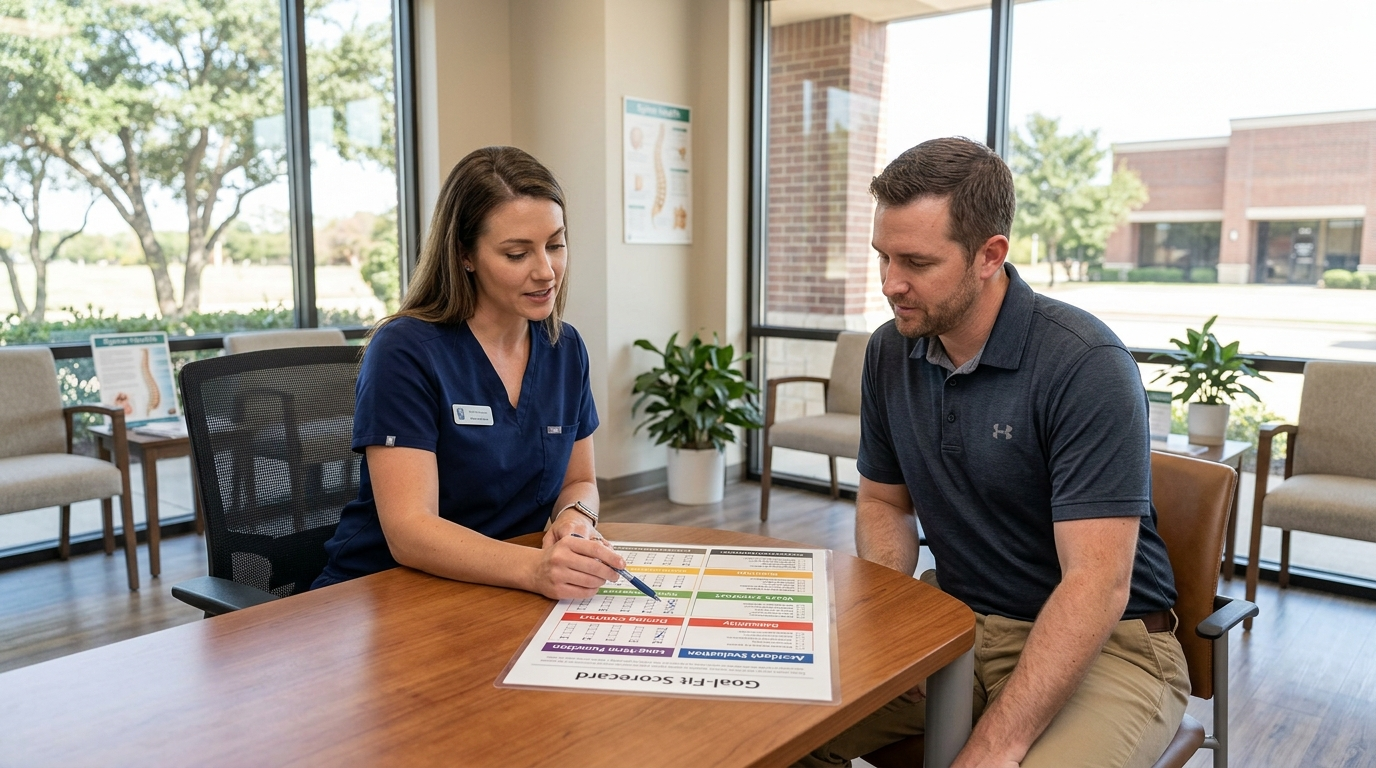
Choosing a chiropractor is easier when you know what you are trying to accomplish.
Some patients need care after a car accident. Others want help with neck pain, back pain, stiffness, headaches, mobility limits, or discomfort that affects work and daily routines. Some people are focused on getting back to driving comfortably. Others want to improve movement after an injury and avoid guessing through recovery.
The right chiropractor should match the patient’s goals, symptoms, activity demands, and recovery needs.
For Arlington patients comparing chiropractors Arlington options after an accident, Premier Injury Clinics of DFW’s Arlington location provides accident-focused chiropractic care, rehabilitation therapy, same-day evaluations when available, structured recovery plans, and transportation assistance for qualifying patients.
Quick Answer
To choose the right chiropractor in Arlington for your wellness goals, start by identifying your main goal: accident evaluation, pain relief, mobility improvement, rehabilitation support, work comfort, driving comfort, or long-term function.
A good chiropractic care choice should offer:
- A clear evaluation process
- Experience with accident-related symptoms
- Chiropractic care for spinal, joint, and movement-related issues
- Rehabilitation therapy when appropriate
- Progress monitoring
- Patient education
- Local access for follow-up visits
- Clear emergency red-flag guidance
The U.S. Department of Transportation explains that post-crash care is part of a safer response after serious crashes because timely care can support better outcomes.
If symptoms are severe, worsening, or include loss of consciousness, chest pain, trouble breathing, confusion, repeated vomiting, weakness, slurred speech, severe headache, numbness, or severe neck or back pain after trauma, emergency medical care should come first.
Key Takeaways
- The best chiropractor for one patient may not be the best fit for another; goals matter.
- After an accident, choose a clinic that understands delayed symptoms, mobility limits, and structured recovery planning.
- Chiropractic care may help evaluate accident-related neck pain, back pain, whiplash symptoms, stiffness, headaches, joint pain, and soft tissue discomfort.
- Rehabilitation therapy may support strength, flexibility, stability, and daily function.
- Local Arlington access matters when recovery requires more than one visit.
- Patients should choose emergency care first for serious or worsening symptoms.
Start With Your Main Wellness Goal
Before choosing a chiropractor, ask: What do I need help with most?
Your answer may fit into one of these goal lanes.
| Wellness Goal | What It May Involve | What to Look For |
| Accident recovery | Pain, stiffness, headaches, delayed symptoms, mobility changes | Accident-focused evaluation and structured recovery planning |
| Mobility improvement | Trouble turning, bending, sitting, standing, walking, or lifting | Range-of-motion review and movement-focused care |
| Work comfort | Pain while sitting, standing, typing, lifting, driving, or walking | Functional activity discussion and progress tracking |
| Driving comfort | Neck stiffness, back pain while sitting, shoulder pain, headaches | Evaluation of posture, movement, and daily activity limits |
| Rehabilitation support | Weakness, stiffness, reduced function after injury | Rehab therapy, guided exercises, and progressive activity planning |
| Long-term function | Returning to normal routines with better movement awareness | Ongoing monitoring and patient education |
This first step matters because chiropractic care should not feel random. It should be connected to what the patient wants to do better in everyday life.
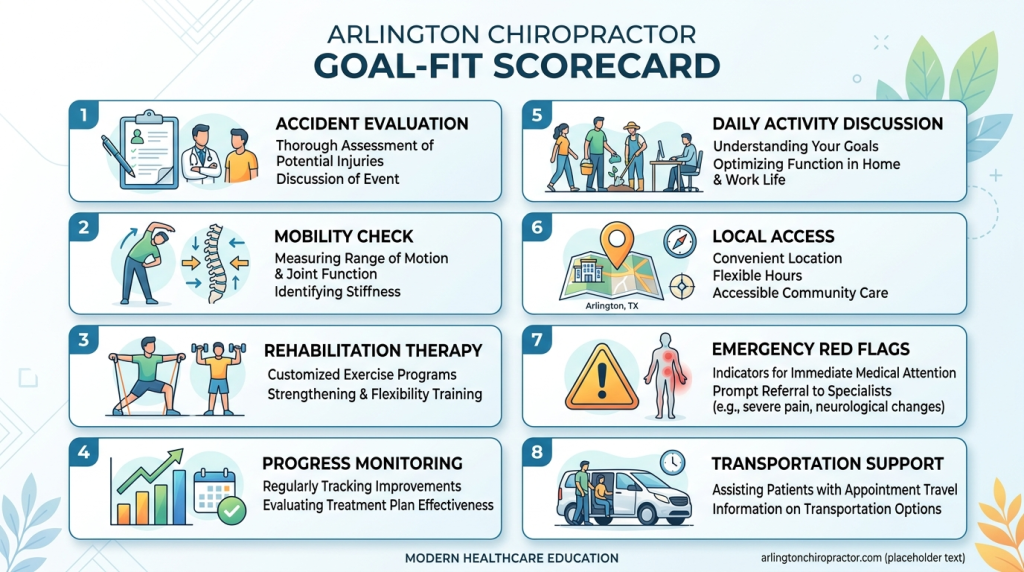
The Arlington Chiropractor Goal-Fit Scorecard
Use this scorecard when comparing local chiropractic options.
| Goal-Fit Question | Why It Matters |
| Do they evaluate accident-related symptoms? | Car accident injuries may show up later and affect movement. |
| Do they check mobility, not just pain level? | Range of motion and daily function are important parts of recovery. |
| Do they offer rehabilitation therapy? | Rehab may support strength, flexibility, stability, and return to activity. |
| Do they monitor progress over time? | Recovery can change from week to week. |
| Do they discuss daily activities? | Work, driving, sleep, and household tasks reveal how symptoms affect life. |
| Do they offer local access? | Follow-up is easier when the clinic is convenient. |
| Do they explain emergency red flags? | Serious symptoms should not be delayed. |
| Do they provide practical support? | Transportation assistance may help qualifying patients get to care. |
A chiropractor does not need to use this exact scorecard. But the care experience should help answer these questions clearly.
Goal 1: Choosing a Chiropractor After an Accident
If your wellness goal begins with accident recovery, your needs may be different from someone seeking general wellness care.
After a car accident, symptoms may appear immediately or develop later. Pain may involve the neck, back, shoulders, knees, joints, muscles, ligaments, tendons, or soft tissues. Some patients notice headaches, stiffness, soreness, numbness, tingling, or reduced mobility.
An accident-focused chiropractor should understand:
- Delayed symptoms
- Whiplash concerns
- Neck and back pain after impact
- Soft tissue soreness
- Joint pain
- Mobility limitations
- Pain during driving, work, sleep, walking, or lifting
- Rehabilitation planning
- Progress monitoring
The goal is not only to ask where it hurts. The goal is to understand how the injury affects movement and daily life.
Goal 2: Choosing a Chiropractor for Mobility
Many patients describe their goal as “feeling better,” but what they really want is to move better.
Mobility goals may include:
- Turning the head more comfortably
- Sitting without back discomfort
- Standing after sitting with less stiffness
- Walking with better confidence
- Bending with less restriction
- Reaching overhead more comfortably
- Getting in and out of a vehicle more easily
- Sleeping with fewer position-related pain issues
A chiropractor who understands mobility should ask how pain affects normal movement, not only how much pain the patient feels at rest.
Goal 3: Choosing a Chiropractor for Work Comfort
Work can reveal injury-related problems quickly.
Office workers may notice neck stiffness, headaches, upper back tension, shoulder discomfort, or lower back pain from sitting. Drivers may notice pain while turning the head, steering, braking, or sitting in traffic. Physical workers may notice pain while lifting, carrying, walking, bending, or standing.
A chiropractic evaluation may be more useful when it includes questions about:
- Sitting tolerance
- Standing tolerance
- Walking demands
- Lifting needs
- Repetitive movement
- Driving or commuting
- Desk posture
- Headaches during work
- Sleep disruption that affects work performance
Care should connect the patient’s symptoms to real activity demands.
Goal 4: Choosing a Chiropractor for Rehabilitation Support
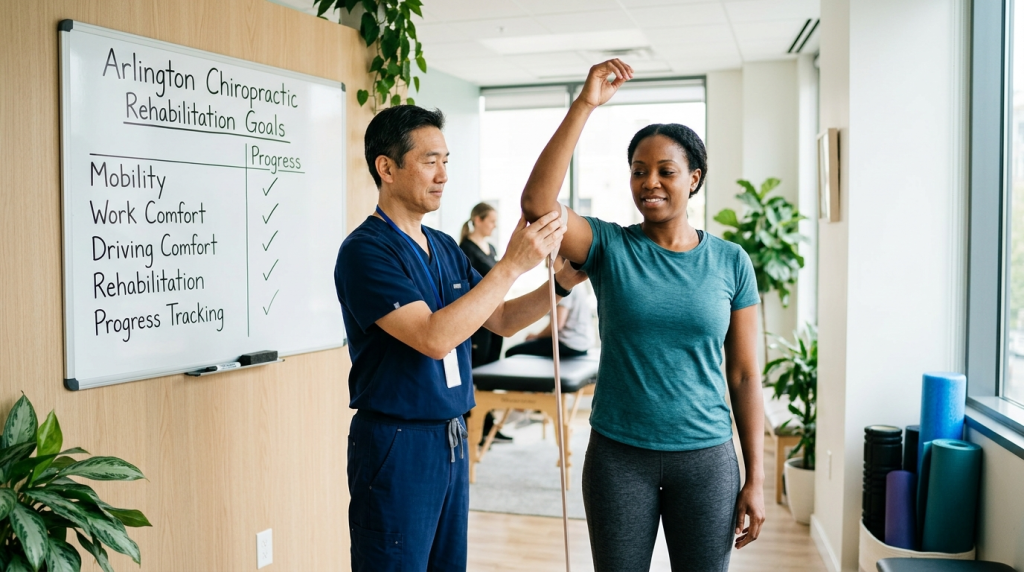
Some patients need more than chiropractic care alone. They may need rehabilitation therapy to support mobility, strength, flexibility, stability, and daily function.
Rehabilitation therapy may include:
- Guided mobility exercises
- Stretching
- Strengthening
- Stability work
- Movement retraining
- Functional movement support
- Progressive return-to-activity guidance
A strong care plan should explain how rehab fits into the patient’s goals.
The goal is not to rush recovery. The goal is to support safer, steadier movement over time.
Goal 5: Choosing a Chiropractor for Driving Comfort
Driving is one of the most common everyday activities affected by accident-related pain.
Patients may notice:
- Neck stiffness when checking blind spots
- Back pain while sitting
- Shoulder pain while steering
- Headaches after commuting
- Knee discomfort while braking
- Hip pain when getting in or out of the vehicle
- Reduced confidence behind the wheel
For Arlington patients, this may matter during commutes near North Collins Street, I-30, SH 360, Division Street, Cooper Street, Randol Mill Road, Downtown Arlington, Grand Prairie, or Mansfield.
A chiropractor who asks about driving can better understand how symptoms affect daily function.
Goal 6: Choosing a Chiropractor for Long-Term Function
Long-term function means being able to return to normal routines with more confidence.
For some patients, that may mean returning to work. For others, it may mean walking, exercising, sleeping better, caring for family, running errands, or moving through the day with less stiffness.
A long-term function plan may include:
- Symptom tracking
- Mobility checks
- Chiropractic care
- Rehabilitation therapy
- Home movement guidance
- Progress monitoring
- Activity modification when needed
- Follow-up evaluation as symptoms change
The right provider should help patients understand what progress looks like.
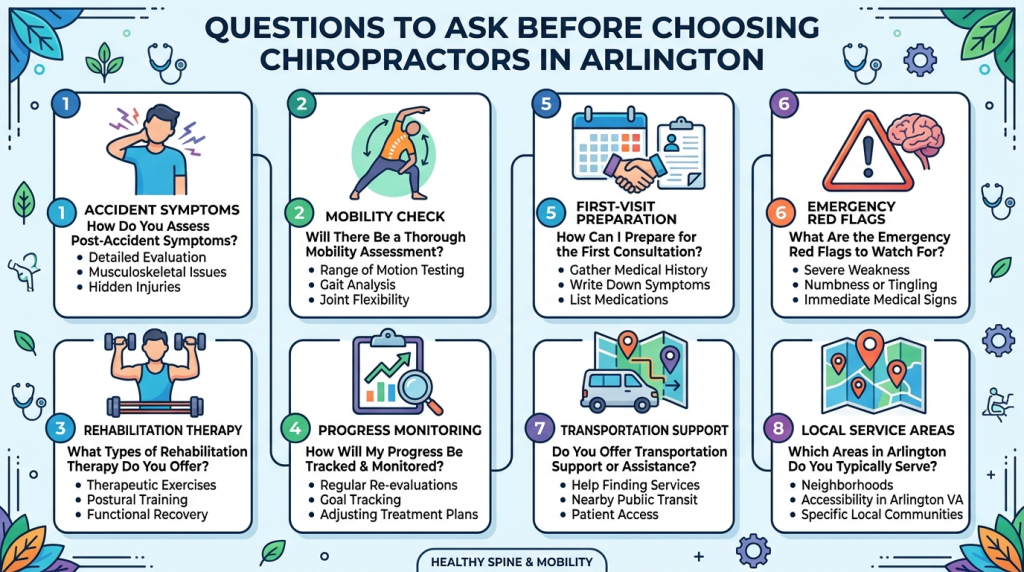
What to Ask Before Choosing a Chiropractor
Before scheduling a visit, consider asking direct questions.
Helpful questions include:
- Do you evaluate accident-related neck pain and back pain?
- Do you assess range of motion and mobility?
- Do you provide rehabilitation therapy?
- How do you monitor progress?
- What should I bring to the first visit?
- What symptoms require emergency care first?
- Do you help patients with delayed symptoms after a car accident?
- Is transportation assistance available for qualifying patients?
- Do you serve Arlington and nearby communities?
- How is the care plan adjusted if symptoms change?
Good questions can make the first visit more focused and help patients choose care that fits their goals.
What an Accident-Focused First Visit May Include
A first visit should help connect symptoms to function.
An accident-focused chiropractic evaluation may include:
- Discussion of the accident
- Review of when symptoms started
- Pain location review
- Neck and back mobility checks
- Range-of-motion review
- Soft tissue symptom discussion
- Pain and tenderness assessment
- Functional movement screening
- Review of driving, work, sleep, and daily activity limitations
- Treatment recommendations
- Recovery plan discussion
- Progress-monitoring plan
This helps the provider understand how the accident affected the body and whether chiropractic care, rehabilitation therapy, soft tissue support, mobility exercises, or additional evaluation may be appropriate.
Common Symptoms to Mention During the Visit
Every symptom matters when choosing care and building a recovery plan.
Tell the provider if you have:
- Neck pain
- Back pain
- Headaches
- Whiplash symptoms
- Shoulder pain
- Knee pain
- Hip discomfort
- Joint soreness
- Soft tissue tenderness
- Stiffness
- Muscle tightness
- Numbness
- Tingling
- Reduced range of motion
- Pain while driving
- Pain while sleeping
- Pain while working
- Pain while walking, sitting, standing, bending, or lifting
Mention when symptoms started and whether they are improving, worsening, or changing.
Whiplash and Neck Pain Considerations
Whiplash is a common concern after rear-end collisions, but neck strain can happen in other crash patterns too.
Mayo Clinic explains that whiplash can happen when the neck moves forcefully and rapidly back and forth.
Whiplash-related symptoms may include:
- Neck pain
- Neck stiffness
- Headaches
- Shoulder or upper back discomfort
- Reduced range of motion
- Tingling or numbness
- Dizziness
- Tiredness
A patient choosing chiropractic care after an accident should mention neck pain, stiffness, headaches, shoulder discomfort, or trouble turning the head.
Local Arlington Access Matters
Local access is important because recovery may require more than one visit.
Premier Injury Clinics of DFW’s Arlington location is at:
1301 N Collins St Suite 201
Arlington, TX 76011
The Arlington clinic serves patients from:
- Arlington
- Grand Prairie
- Mansfield
- Pantego
- Kennedale
- Dalworthington Gardens
- Surrounding Tarrant County communities
- Nearby DFW areas
This location may be helpful for patients near:
- North Collins Street
- I-30
- SH 360
- Division Street
- Cooper Street
- Randol Mill Road
- Downtown Arlington
- North Arlington
- Grand Prairie
- Mansfield
Transportation assistance may be available for qualifying patients recovering after an accident.
Choosing Care Based on Fit, Not Hype
Patients should be careful about choosing care based only on bold claims.
Instead, look for a clinic that can explain:
- What will be evaluated
- How symptoms are connected to movement
- What care may be appropriate
- Whether rehabilitation therapy is part of the plan
- How progress will be monitored
- What symptoms should be treated as emergency red flags
- How follow-up care will work
- Whether transportation support may be available
A good fit should feel clear, organized, and patient-focused.
Red Flags: When to Seek Emergency Care
Chiropractic care and rehabilitation therapy may help many accident-related musculoskeletal symptoms, but some symptoms require emergency medical attention.
Seek emergency care immediately if you experience:
- Loss of consciousness
- Chest pain
- Trouble breathing
- Severe or worsening headache
- Confusion
- Repeated vomiting
- Weakness on one side of the body
- Slurred speech
- Heavy bleeding
- Severe abdominal pain
- Severe neck or back pain after trauma
- Numbness or weakness in the arms or legs
- Loss of bladder or bowel control
- Seizure
- Unequal pupils
- Unusual behavior after head trauma
The CDC lists danger signs after a possible traumatic brain injury or concussion, including worsening headache, repeated vomiting, weakness, numbness, seizures, slurred speech, confusion, unusual behavior, unequal pupils, and loss of consciousness.
When in doubt, choose emergency care first. Once serious conditions are ruled out, accident-focused chiropractic care and rehabilitation may be part of the recovery process.
Chiropractor Selection Checklist
Use this checklist when comparing Arlington chiropractic options.
| Selection Question | Yes / No |
| Does the clinic evaluate accident-related symptoms? | |
| Does the provider ask about daily movement and function? | |
| Is range of motion reviewed? | |
| Is rehabilitation therapy available if needed? | |
| Are progress changes monitored over time? | |
| Is the clinic convenient for follow-up visits? | |
| Is transportation assistance available for qualifying patients? | |
| Are emergency red flags explained clearly? | |
| Does the care plan fit your goal? | |
| Do you feel comfortable asking questions? |
Frequently Asked Questions
How do I choose the right chiropractor in Arlington?
Start by identifying your main goal: accident recovery, pain relief, mobility, work comfort, driving comfort, rehabilitation support, or long-term function. Then look for a clinic that evaluates symptoms, movement, daily activity limits, and progress over time.
What should I look for after a car accident?
Look for accident-focused evaluation, chiropractic care, rehabilitation therapy, delayed symptom awareness, mobility checks, structured recovery plans, and emergency red-flag guidance.
Can chiropractic care help with wellness goals?
Chiropractic care may support wellness goals related to movement, function, mobility, posture awareness, and recovery after musculoskeletal injury. Care should be based on evaluation findings and patient-specific needs.
Should I choose a chiropractor who offers rehab therapy?
If your symptoms affect strength, flexibility, stability, or daily function, rehabilitation therapy may be helpful. A chiropractor who offers or coordinates rehab support may provide a more complete recovery plan.
What symptoms should I mention during the visit?
Mention neck pain, back pain, headaches, stiffness, soreness, shoulder pain, knee pain, soft tissue tenderness, joint discomfort, numbness, tingling, reduced mobility, and pain during driving, work, sleep, walking, sitting, standing, bending, or lifting.
Can accident symptoms appear days later?
Yes. Accident symptoms may appear hours or days later. Delayed symptoms may include neck pain, back pain, headaches, stiffness, soreness, soft tissue discomfort, joint pain, numbness, tingling, and reduced mobility.
What does an accident-focused chiropractor evaluate?
An accident-focused chiropractor may evaluate symptoms, accident history, pain location, range of motion, neck and back mobility, soft tissue tenderness, functional movement, and daily activity limitations.
Is local access important when choosing care?
Yes. Recovery may require more than one visit. A local Arlington clinic can make follow-up care easier for patients near North Collins Street, I-30, SH 360, Grand Prairie, Mansfield, Pantego, Kennedale, and nearby Tarrant County communities.
Is transportation available for Arlington patients?
Transportation assistance may be available for qualifying patients recovering after an accident. Availability may vary, so patients should contact the Arlington clinic for details.
When should I go to the emergency room instead?
Go to the emergency room or call 911 for serious or worsening symptoms, including loss of consciousness, chest pain, trouble breathing, severe headache, confusion, repeated vomiting, weakness, slurred speech, numbness, severe neck or back pain after trauma, or loss of bladder or bowel control.
Final Thoughts
Choosing the right chiropractors in Arlington starts with choosing based on goals, not hype.
If your goal is accident recovery, look for accident-focused evaluation and structured recovery planning. Your goal is mobility, choose care that checks movement and daily function. If your goal is work comfort or driving comfort, make sure those activities are part of the conversation. If your goal is long-term function, ask how progress will be monitored and how rehabilitation therapy may fit the plan.
Premier Injury Clinics of DFW’s Arlington location provides accident-focused chiropractic care, rehabilitation therapy, same-day evaluations when available, structured recovery plans, progress monitoring, and transportation assistance for qualifying patients.
Visit the Premier Injury Clinics of DFW Arlington location page to learn more about chiropractic care, accident injury evaluations, rehabilitation therapy, and recovery support in Arlington.