


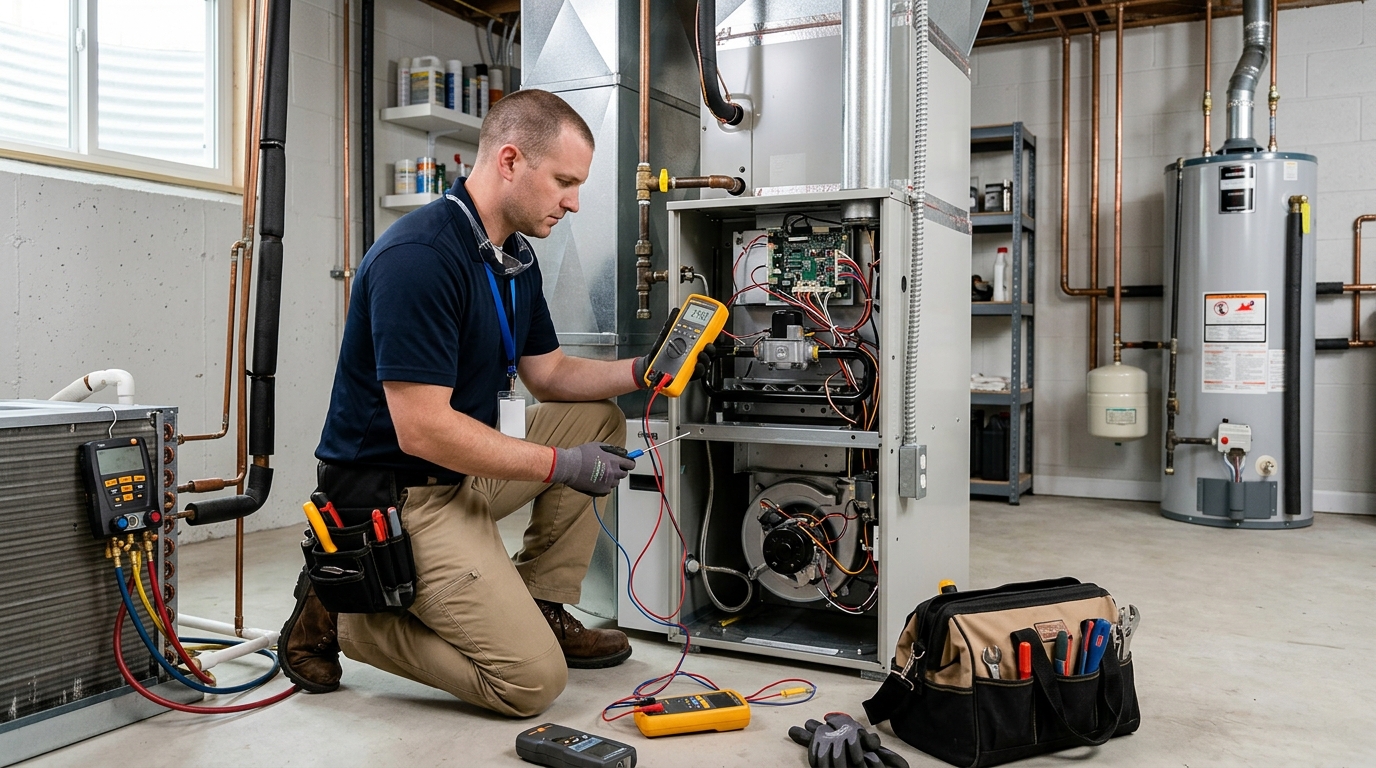
Heating and cooling systems rarely fail without giving some indication that something is wrong. In many cases, an HVAC system begins showing subtle performance changes weeks or even months before a major breakdown occurs.
A furnace may start cycling more frequently. An air conditioner may take longer to cool the home. Certain rooms may become noticeably warmer or colder than others. Utility bills may increase even though thermostat settings and household routines have remained largely unchanged.
These symptoms are easy to overlook, particularly when the HVAC system continues to operate. However, recognizing them early can give homeowners an opportunity to address a developing problem before it results in a complete loss of heating or cooling.
This is especially important in Michigan, where an HVAC breakdown during periods of extreme winter cold or summer heat can quickly become more than an inconvenience.
Homeowners who notice multiple warning signs may benefit from scheduling professional HVAC system repair before a deteriorating component causes additional damage.
Quick Answer
Common warning signs that an HVAC system may be approaching failure include increasingly frequent repairs, unusual noises, weak airflow, inconsistent temperatures, short cycling, unexpected increases in energy consumption, unusual odors, difficulty starting, and declining heating or cooling performance. One symptom does not necessarily mean the entire system needs replacement, but persistent or worsening problems should be professionally diagnosed.
Key Takeaways
- HVAC systems often develop noticeable symptoms before a major breakdown.
- A sudden change in system performance deserves attention.
- Frequent cycling can increase wear on HVAC components.
- Unusual mechanical or electrical noises should not be ignored.
- Weak airflow can indicate problems beyond a dirty filter.
- Rising utility costs may indicate declining system efficiency.
- Repeated repairs can signal that aging equipment is becoming less reliable.
- Preventive maintenance can identify some developing problems before they cause a system failure.
Why HVAC Systems Usually Show Warning Signs
Residential HVAC systems contain numerous components that must work together correctly, including motors, fans, electrical controls, compressors, heat exchangers, burners, refrigerant circuits, thermostats, and ductwork.
As components wear, the system may compensate by operating longer or working harder to maintain the desired indoor temperature.
That can create symptoms such as:
- Longer operating cycles
- Higher energy consumption
- Temperature fluctuations
- Increased operating noise
- Reduced airflow
- More frequent service calls
The challenge is that many of these symptoms can have several possible causes. A weak airflow problem, for example, could result from a dirty filter, duct restriction, blower issue, or frozen evaporator coil.
For that reason, warning signs should generally be treated as reasons for investigation rather than automatic evidence that the entire HVAC system needs replacement.
1. Heating or Cooling Performance Is Getting Worse
One of the clearest warning signs is a noticeable decline in the system’s ability to maintain comfortable indoor temperatures.
A homeowner might notice that:
- The air conditioner takes much longer to cool the house.
- The furnace struggles to reach the thermostat setting.
- Certain rooms no longer remain comfortable.
- The HVAC system runs for increasingly long periods.
- Supply air feels different from normal.
Gradual performance decline can result from several issues, including dirty coils, airflow restrictions, aging motors, refrigerant problems, failing controls, or worn mechanical components.
When performance continues deteriorating despite normal filter replacement and thermostat settings, professional HVAC repair service can help determine the underlying cause.
2. The System Starts Making New or Unusual Noises
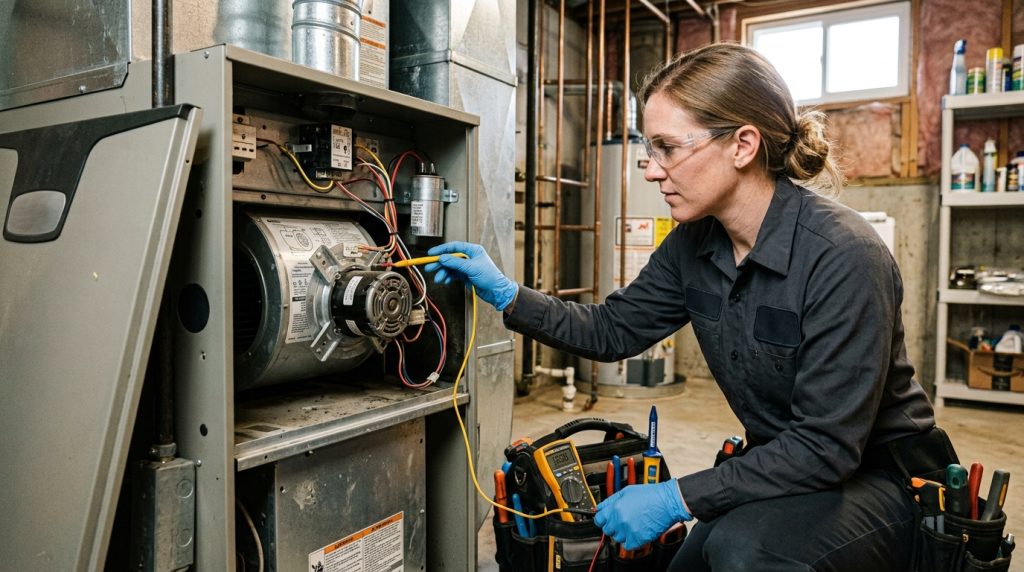
HVAC equipment naturally makes some noise while operating. Homeowners usually become familiar with the normal startup, airflow, and shutdown sounds of their systems.
A new sound is therefore worth paying attention to.
Potential warning noises include:
- Grinding
- Screeching
- Banging
- Rattling
- Buzzing
- Persistent clicking
Different noises can point toward different problems. Grinding or squealing may involve moving components, while buzzing can sometimes indicate an electrical issue.
A single brief sound does not necessarily indicate imminent failure, but noises that become louder, more frequent, or occur alongside declining performance should be investigated.
3. The HVAC System Frequently Turns On and Off
An HVAC system normally operates in cycles. However, repeatedly starting and stopping after unusually short periods can indicate a condition commonly referred to as short cycling.
Potential causes include:
- Thermostat problems
- Restricted airflow
- Electrical issues
- Improper equipment sizing
- Refrigerant problems
- Overheating components
Short cycling can be particularly problematic because repeated startups place additional stress on system components.
It may also prevent the equipment from operating long enough to effectively regulate temperature and humidity.
4. Airflow From the Vents Becomes Noticeably Weaker
Reduced airflow is another symptom homeowners should monitor.
Before calling for service, checking the air filter is a reasonable first step. A heavily clogged filter can significantly restrict airflow.
If airflow remains weak after installing a clean filter, other possibilities may include:
- Blower motor problems
- Duct restrictions
- Frozen evaporator coils
- Fan issues
- Closed or blocked vents
- Significant duct leakage
Persistent airflow problems can reduce comfort while forcing the HVAC system to operate longer to reach the thermostat setting.
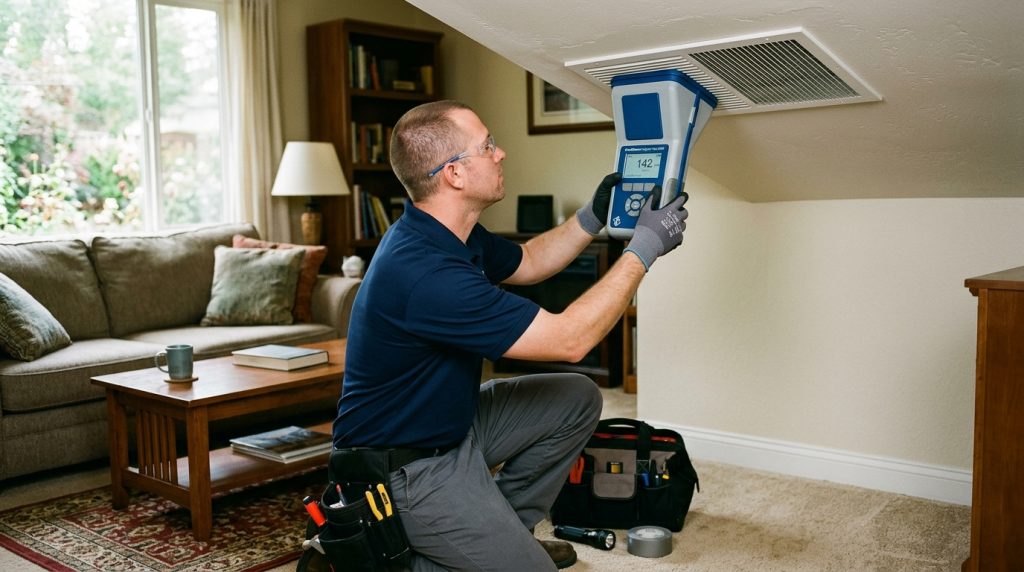
5. Some Rooms Become Much Hotter or Colder Than Others
Minor temperature differences between rooms are normal, particularly in larger or multi-story homes.
A sudden increase in temperature imbalance, however, may indicate a developing HVAC or airflow problem.
Potential causes include:
- Duct leakage
- Airflow restrictions
- Blower performance problems
- Poor system balancing
- Thermostat or zoning issues
- Declining equipment capacity
If rooms that were previously comfortable begin developing persistent hot or cold spots, the change deserves investigation.
6. Energy Bills Increase Without an Obvious Explanation
Energy costs naturally change with weather, utility rates, thermostat settings, and household activity. For that reason, a single expensive utility bill does not necessarily indicate HVAC trouble.
A more meaningful warning sign is a sustained increase in energy consumption without a corresponding change in weather or household habits.
Declining efficiency may result from:
- Dirty coils
- Restricted airflow
- Aging motors
- Refrigerant problems
- Duct leakage
- Mechanical wear
The U.S. Department of Energy’s Energy Saver guidance emphasizes energy-efficient heating and cooling practices as an important part of controlling household energy consumption.
Tracking energy usage over several billing periods can make unexplained changes easier to identify.
7. Repairs Are Becoming More Frequent
An occasional repair does not mean an HVAC system is nearing the end of its useful life.
The pattern becomes more concerning when different components begin failing repeatedly within a relatively short period.
For example, a homeowner might repair one component during the heating season, experience another failure several months later, and then require additional service the following year.
At that point, it can be useful to compare:
- Recent repair expenses
- Equipment age
- Current efficiency
- Expected future repairs
- Replacement cost
- Remaining useful life
Frequent repairs do not automatically mean replacement is necessary, but they can indicate that the overall system is becoming less dependable.
Preventive Maintenance Can Reveal Problems Earlier
Routine maintenance cannot prevent every HVAC failure. Components eventually wear out regardless of how carefully equipment is maintained.
However, professional HVAC maintenance service can identify many developing problems before they cause an unexpected shutdown.
Depending on the equipment, maintenance may include:
- Electrical connection inspections
- Blower and fan checks
- Coil inspection and cleaning
- Airflow measurements
- Thermostat testing
- Safety-control testing
- Condensate drainage inspection
- Overall system performance evaluation
Finding a worn or deteriorating component during scheduled maintenance gives homeowners more time to consider repair options rather than making decisions during an emergency breakdown.
8. Unusual Odors Develop During Operation
Heating and cooling equipment should not normally produce persistent burning, electrical, or musty odors.
A brief dusty smell when a furnace operates for the first time after months of inactivity can sometimes occur as accumulated dust heats up. Persistent or worsening odors, however, deserve attention.
Different smells can suggest different problems:
- Burning or electrical odors may indicate overheating components, wiring problems, or failing motors.
- Musty odors may be associated with moisture accumulation or microbial growth.
- Persistent smoky smells may indicate combustion or electrical problems requiring immediate evaluation.
If an odor smells strongly electrical or appears alongside smoke, sparks, or repeated breaker trips, homeowners should stop operating the equipment and have the system professionally evaluated.
9. The HVAC System Has Difficulty Starting
An HVAC system that repeatedly struggles to start may be developing an electrical or mechanical problem.
Homeowners might notice:
- Several attempts before startup
- Clicking without normal operation
- Delayed blower operation
- Intermittent operation
- Unexpected shutdowns
- A circuit breaker that repeatedly trips
Possible causes can include failing capacitors, worn electrical contacts, thermostat problems, control-board issues, motors, or other electrical components.
Repeated startup problems should not be treated as normal aging. Continuing to operate equipment with an unresolved electrical problem may place additional stress on other components.
10. The Thermostat and HVAC System Stop Working Together Properly
Sometimes symptoms that appear to indicate HVAC equipment failure actually originate with the thermostat or its controls.
Warning signs can include:
- Incorrect temperature readings
- Failure to respond to temperature changes
- Unexpected cycling
- Rooms becoming too warm or cold
- Equipment operating when it should be off
- Heating or cooling failing to start
Before assuming the HVAC system itself is failing, homeowners can check thermostat settings and replace batteries where applicable.
Persistent communication or control problems should be professionally diagnosed because the thermostat, wiring, control board, or HVAC equipment could be responsible.
11. Water or Excess Moisture Appears Around the Equipment
Water around HVAC equipment should not automatically be interpreted as a major system failure, but it should not be ignored.
Air conditioners and heat pumps naturally produce condensation while removing moisture from indoor air. That water should normally leave the system through the condensate drainage system.
Visible moisture may result from:
- A clogged condensate drain
- A damaged drain pan
- Frozen evaporator coils
- Drainage problems
- Excessive condensation
Water that remains around the equipment can also damage nearby building materials and contribute to unwanted moisture conditions.
The U.S. Environmental Protection Agency provides indoor air quality guidance that emphasizes controlling indoor moisture as part of maintaining healthier indoor environments.
12. The HVAC System Is Getting Older
Age alone does not determine whether an HVAC system is about to fail.
A well-maintained older system may continue providing dependable service, while poorly maintained equipment can experience significant problems much earlier.
However, age becomes more important when combined with other warning signs such as:
- Frequent repairs
- Increasing utility costs
- Reduced comfort
- Excessive noise
- Difficulty maintaining temperature
- Major component problems
Instead of replacing equipment solely because it has reached a particular age, homeowners should consider its overall condition, efficiency, repair history, and reliability.
One Warning Sign Doesn’t Necessarily Mean System Failure
It is important to distinguish between a repairable problem and an HVAC system that is genuinely approaching the end of its useful life.
For example:
A dirty filter can cause weak airflow.
A faulty thermostat can cause unusual cycling.
A failed capacitor can prevent an otherwise healthy air conditioner from starting.
A clogged condensate drain can create water around the equipment.
Each problem may be repairable without replacing the entire HVAC system.
Concern increases when several symptoms occur together—particularly when the equipment is older and has already required multiple repairs.
Repair or Replace: How Should Homeowners Decide?
When a significant HVAC problem develops, homeowners often face a difficult question: repair the existing system or invest in replacement equipment?
There is no universal formula that applies to every situation.
Repair may make more sense when:
- The equipment is relatively young.
- The problem involves a replaceable component.
- Previous reliability has been good.
- Overall efficiency remains acceptable.
- Repair costs are reasonable.
Replacement deserves greater consideration when:
- Breakdowns occur repeatedly.
- Major components are failing.
- Energy consumption has increased substantially.
- Comfort has declined.
- Equipment is approaching the end of its expected service life.
- The cost of keeping the system operational continues increasing.
A professional HVAC system repair assessment can help determine whether the current problem is isolated or part of a broader pattern of equipment deterioration.
Why Energy Efficiency Matters When Evaluating an Aging System
An HVAC system does not have to stop operating completely to become expensive to own.
Older equipment may gradually consume more energy because of:
- Component wear
- Reduced heat-transfer performance
- Airflow problems
- Aging motors
- Duct losses
- Outdated equipment efficiency
ENERGY STAR provides information about energy-efficient heating and cooling that homeowners can use when comparing existing equipment with newer HVAC technologies.
The important comparison is not simply the purchase price of new equipment versus today’s repair bill. Homeowners should consider future repairs, operating costs, reliability, efficiency, and expected remaining equipment life.
When Should You Call an HVAC Professional?
Professional evaluation is recommended when warning signs are persistent, worsening, or occurring simultaneously.
Examples include:
- The system repeatedly fails to start.
- Heating or cooling performance continues declining.
- Electrical or burning odors appear.
- Unusual noises become increasingly loud.
- Breakers repeatedly trip.
- Airflow remains weak after filter replacement.
- Water repeatedly accumulates around the equipment.
- Repairs are becoming more frequent.
Homeowners should avoid opening electrical compartments, handling refrigerants, or attempting repairs that require specialized testing equipment.
Prompt professional diagnosis can often identify the problem before additional components are damaged.
Choosing an HVAC Professional Before an Emergency Happens
One of the least convenient times to research an HVAC company is after the heating or cooling system has already stopped working.
Identifying a qualified provider before an emergency gives homeowners time to evaluate:
- Licensing and insurance
- Technical experience
- Repair capabilities
- Maintenance services
- Customer communication
- Warranty support
- Emergency availability
Customer feedback can provide another useful perspective. Reviewing public business profiles can help homeowners evaluate reported experiences and service patterns alongside licensing, qualifications, and other contractor-selection factors.
No single review should determine the decision, but consistent patterns across customer feedback can provide useful context.
Maintenance Can Reduce the Risk of Unexpected Failure
Preventive maintenance cannot make HVAC equipment last indefinitely, nor can it guarantee that a component will never fail.
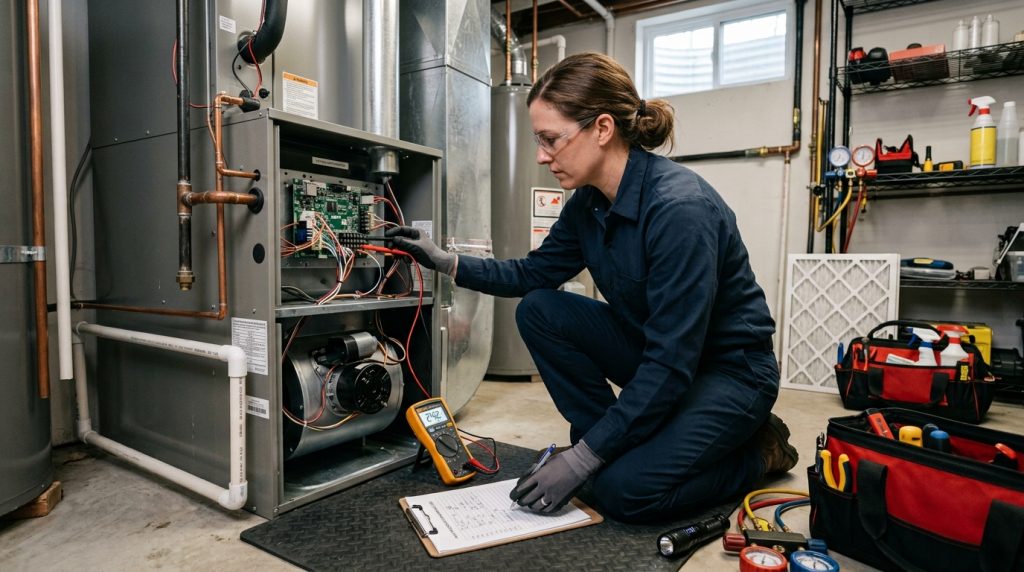
What maintenance can do is create opportunities to identify abnormal wear and declining performance earlier.
Regular HVAC maintenance service may help technicians detect:
- Loose electrical connections
- Worn components
- Dirty coils
- Airflow problems
- Drainage issues
- Abnormal operating conditions
- Safety-control problems
This can give homeowners more time to plan repairs or replacement instead of making an expensive decision during a heating or cooling emergency.
Conclusion
HVAC systems rarely provide an exact countdown before they fail, but changes in performance can provide valuable clues.
Declining heating or cooling capacity, unusual noises, short cycling, weak airflow, unexplained increases in energy consumption, startup difficulties, persistent odors, moisture problems, and increasingly frequent repairs all deserve attention.
One symptom does not necessarily mean an HVAC system needs replacement. Many problems can be corrected through professional HVAC repair service.
The larger concern is a pattern of worsening symptoms, particularly in aging equipment with a history of repeated repairs.
Recognizing those warning signs early gives homeowners more options. Instead of waiting for a complete breakdown, they can investigate the problem, compare repair and replacement costs, and make a planned decision based on reliability, efficiency, comfort, and long-term value.
Frequently Asked Questions
What are the most common warning signs that an HVAC system is failing?
Common warning signs include declining heating or cooling performance, weak airflow, unusual noises, frequent cycling, startup problems, unexplained increases in energy consumption, unusual odors, moisture around equipment, and increasingly frequent repairs. Several symptoms occurring together can be more concerning than one isolated issue.
Does a strange noise mean my HVAC system is about to fail?
Not necessarily, but a new grinding, banging, squealing, buzzing, or persistent clicking sound should be investigated. The cause could range from a loose component to a motor, fan, electrical, or compressor problem.
Why is my HVAC system running but not heating or cooling properly?
Poor performance can result from restricted airflow, dirty coils, thermostat problems, refrigerant issues, worn components, or other mechanical faults. Professional HVAC repair service can help identify the actual cause rather than relying on symptoms alone.
Is short cycling a warning sign of HVAC failure?
It can be. Short cycling means the equipment repeatedly starts and stops without completing normal operating cycles. Possible causes include thermostat problems, restricted airflow, electrical faults, refrigerant issues, overheating, or improper system sizing.
Why has the airflow from my HVAC vents become weaker?
A dirty filter is a common cause, so checking the filter is a sensible first step. Persistent weak airflow may also involve blower problems, duct restrictions, frozen coils, fan issues, or duct leakage.
Can higher energy bills indicate HVAC problems?
Yes, particularly when energy consumption increases without a major change in weather, thermostat settings, or household usage. ENERGY STAR notes that dirty filters can restrict airflow, make equipment work harder, and contribute to higher energy costs and premature failure.
Is water around an HVAC system a serious problem?
It can be. Air conditioners and heat pumps normally produce condensation, but that moisture should drain properly. Standing water may indicate a clogged condensate drain, drainage problem, frozen coil, or damaged drain pan. EPA guidance emphasizes moisture control because excess moisture can contribute to indoor air-quality problems.
Should I repair or replace an HVAC system that keeps breaking down?
Repeated breakdowns justify comparing the cost of continued HVAC system repair with replacement. Equipment age, efficiency, repair history, comfort, major component condition, and expected remaining service life should all be considered.
Does HVAC equipment age automatically mean it should be replaced?
No. Age is only one factor. An older system that remains efficient, reliable, and well maintained may continue providing useful service. Age becomes more significant when combined with frequent repairs, declining comfort, rising energy use, or major component failures.
Can HVAC maintenance prevent system failure?
Maintenance cannot prevent every breakdown, but it can identify developing problems earlier. ENERGY STAR recommends annual pre-season professional checkups and specifically includes electrical connections, controls, condensate drainage, coils, refrigerant levels, and airflow among maintenance items.
How often should HVAC maintenance be scheduled?
Heating and cooling equipment generally benefits from annual pre-season inspections—cooling equipment before summer and heating equipment before winter. A professional HVAC maintenance service can also establish a schedule based on equipment type, age, usage, and manufacturer recommendations. ENERGY STAR similarly recommends spring cooling and fall heating checkups.
When should I call an HVAC professional immediately?
Prompt professional attention is appropriate when there is a strong electrical or burning odor, smoke, repeated breaker trips, severe mechanical noise, repeated startup failure, significant water leakage, or complete loss of heating or cooling. Homeowners should avoid handling refrigerants or opening electrical components without appropriate training.